
Land+Living
Land+Living
Paisaje de Canoas
Water Sports Center in Zahara de la Sierra, Cádiz, Spain
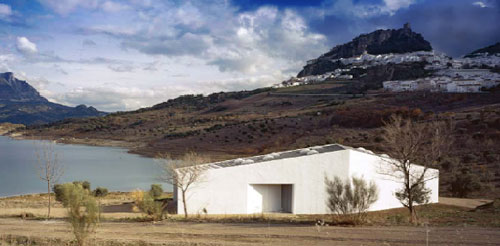

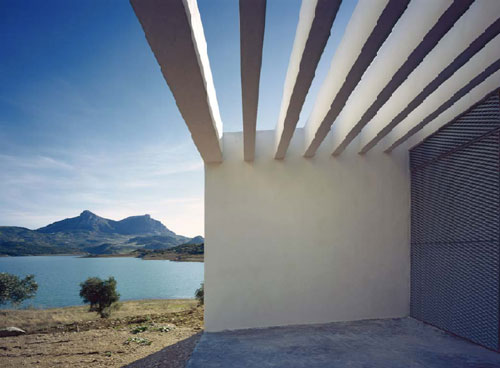
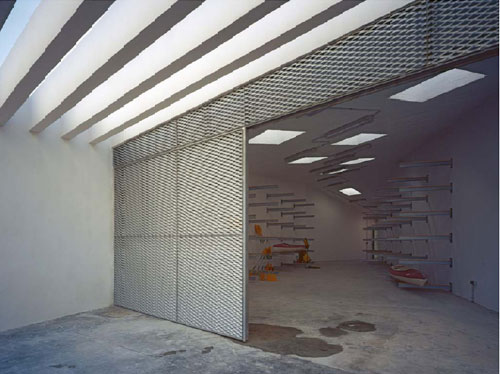
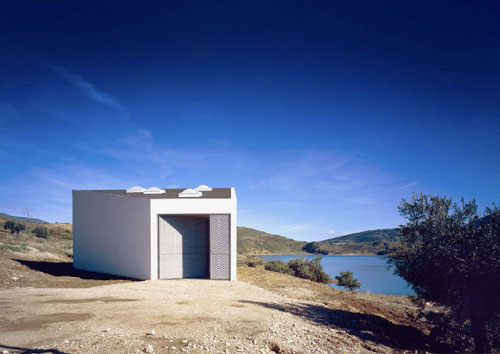
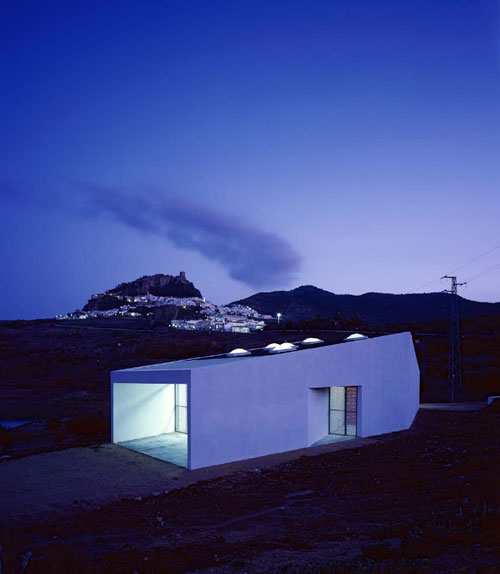
Spanish architect Julio Barreno Gutiérrez designed this boathouse just outside the small town of Zahara de la Sierra on the shore of the man-made lake, El Embalse de Zahara. The small structure serves as a boat storage facility and also houses changing rooms and restrooms for boaters, and is meant to be part of a larger recreation area in development.

While small and utilitarian, the structure responds elegantly to the native landscape, the high waterline of the resevoir, and the local vernacular of the "pueblo blanco" hillside town. The design was awared the 2008 Torres Key Prize by the College of Architects of Cádiz given every two years to honor the best new buildings in Cádiz. The architect describes the town "as a dense liquid falling down along the slope" and the small parcels and buildings along the shore as "small white pieces" scattered below; a green and white pixelated landscape.

Architect Julio Barreno Gutiérrez is an Associate Professor for the School of Architecture at the University of Seville.

Location: L+L Maps - Paisaje de Canoas
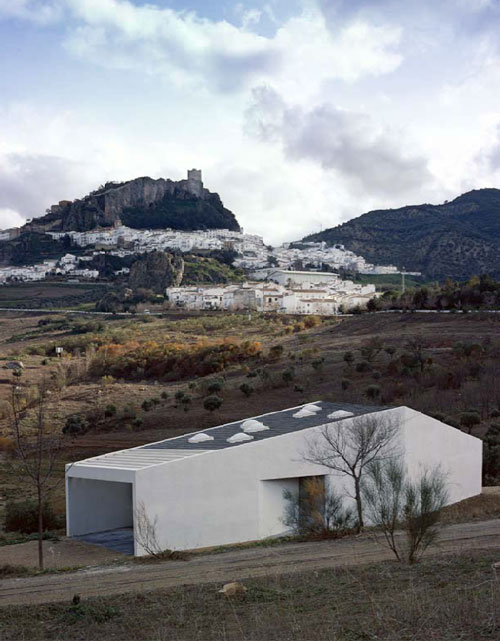


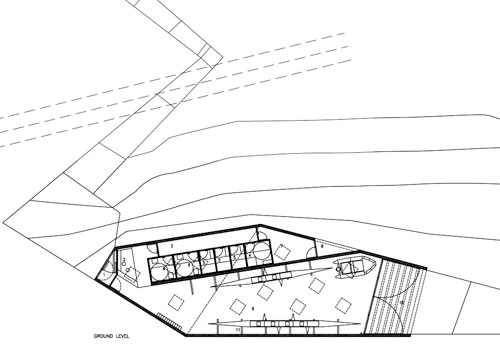
The deformed shape of the building in plan is derived from the existing site conditions (location of the road, aerial electrical lines, and high water line, as well as the "terreno" soil conditions) which precluded perpendicular geometry. The building also serves as an "interchanger," a stop in the path for changing and the collection of gear as one moves from the parking area to the pier. The structure is built using the current favored local construction materials--cast concrete painted white, and black roofing tiles.

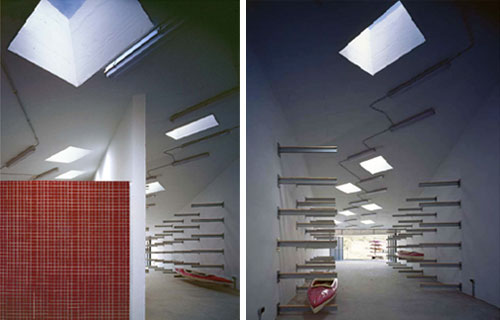
The interior space is divided into two halves (the boat storage area and the changing area clad in red tile) lit by a series of square skylights punched into the ceiling. Detailing pragmatic is yet meticulous. A wide porch with large access doors opens at the north end of the building.


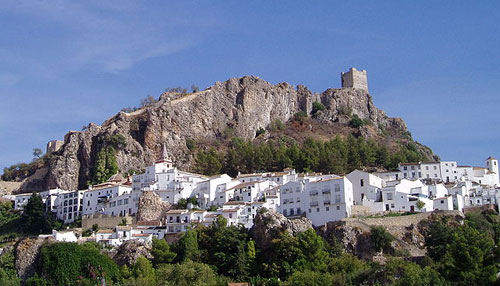
The white hillside town ("pueblo blanco") of Zahara de la Sierra.


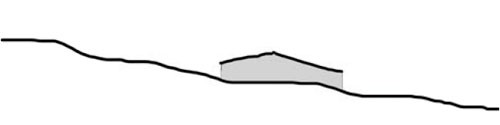
A simple sketch describes the building as it relates to the landscape in section.


View Land+Living Maps in a larger map

 Comments (1)
Osama Gaballah  — January 5, 2010
Nefertiti Egypt fine antique reproduction furniture, French, hotel furniture, hotel renovation supply
During the Louis XIV reign (1643-1715), France was at the top manufacturer of luxury objects. A main factor was that the king used outstanding craftsmen to decorate the Versailles palace. To emphasize the power of the monarch the reign of the French king Louis XIV was characterized by the Baroque style. The Versailles Palace and the Louver were decorated in a strong, dramatic and exuberant style echoing the king’s strong leadership in a period of war and colonial empire building. The French classical Baroque style was grand and impressive, a symbol of power. Baroque reached its highest zenith when it was executed on a grand scale, especially in architecture and sculpture. The Baroque is a style that used exaggerated motion, gestures and expressions to produce drama, tension, exuberance and grandeur in sculpture, painting, literature, dance and music. The style started around 1600 in Italy and spread from there to most of Europe. To view more models please visit our detailed web site http://www.wholesaleantiquereproductionfurniture.com/ The Baroque style had its origin in the Italian painting, sculpture and architecture in the decade of 1620. Characterized by decorated and complicated figures, the style reached its splendor in France, in the court of Louis 15, where the most exquisite craftsmen produced decorative arts of great wealth. The greatness of the Baroque sculpture and architecture were reflected especially in the decorative arts and in the furniture. The style incorporated architectonic and sculpture elements, with the use of fontanels (triangular closings), heavy volutes and garlands, although also it used bulbous figures, elaborated molded, gilded and floral marquetry. Were chosen the most luxurious materials, including the velvet, the brocade and Damascus upholsteries, the semiprecious stones and ivory. The intensification of commerce between China and the West during the 17 century influenced in the style, increasing in the demands of panels and lacs furniture, specially of blue and white porcelain. The French baroque style also spread new ideas by all Europe in 1670 and 1680, by means of the production in carved ornaments
back to top ↑