

Photographer Xavier Nuez
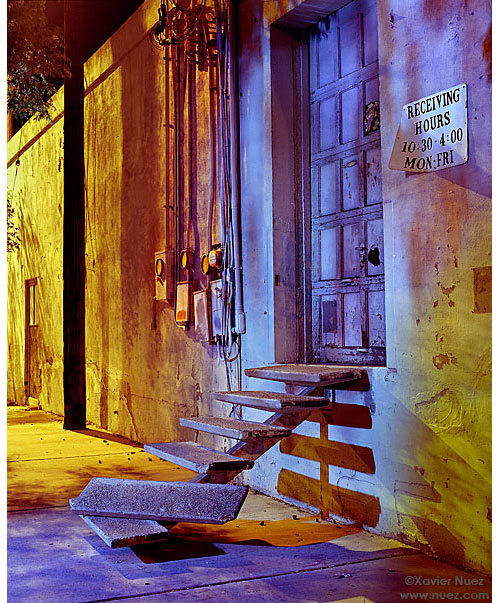
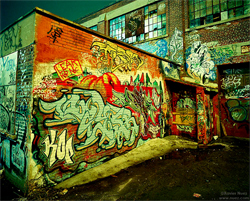 Photographer Xavier Nuez ventures late at night to places you are warned not to go, drawn to document bleak urban spaces. However, his photographs transcend the gloom and uncover the sublime; while some photos display an aura of foreboding, many reveal an uncanny sense of calm seemingly at odds with reality. Nuez offers a glimpse of his forays into these forbidding realms in the Alley Stories section of his website.
I've been chased by violent street gangs, accosted by crazed addicts and drug dealers, and have been held at gun point. If the police see me lurking in a dark alley, often I am questioned and searched. And yet under these trying conditions, and within the filth and stench of the city's gutters, I find inspiration. With a family history of homelessness and with a belief that I was next, I found the need to create monuments out of these shunned places.Nuez uses three Hasselblad film cameras, two of which are more than 50-years old. To capture the vivid colors in his images, he shoots with battery-powered lights and colored gels that are combined with long exposures.
Xavier Nuez's photographs have been featured in solo and group exhibitions in museums and galleries throughout the United States and in Canada
A selection of Nuez's photographs will be on exhibition August 24 through September 27, 2009, at the Florida State University Museum of Fine Arts in Tallahassee, Florida.
Link: Xavier Nuez
Slideshow: Alleys
ABOVE: Alley no. 41, Nutin tu say! (1998, New York City, NY, 3am)
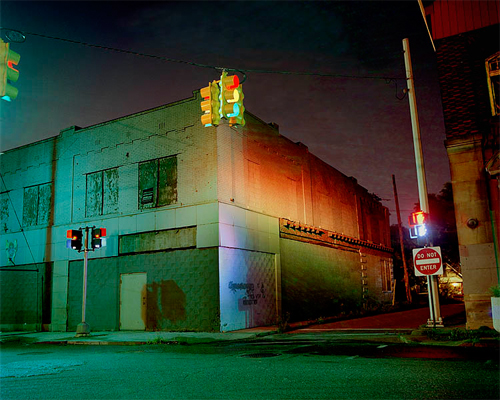
Alley no. 69, Enter (2005, Detroit, MI, 2:30am)
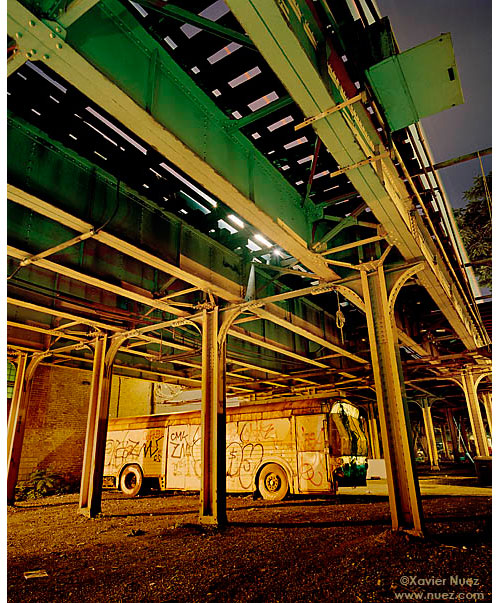
Alley no. 77, Trains and Buses (2005, Chicago, IL, 12:30am)
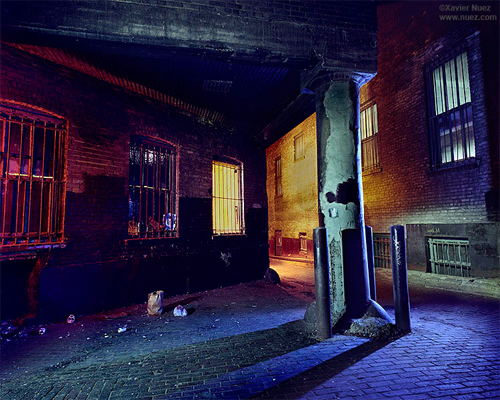
Alley no. 111, Intersect (2008, St. Paul, MN, 11pm)
Alley no. 68, Gated (2005, Buffalo, NY, 11:15pm)
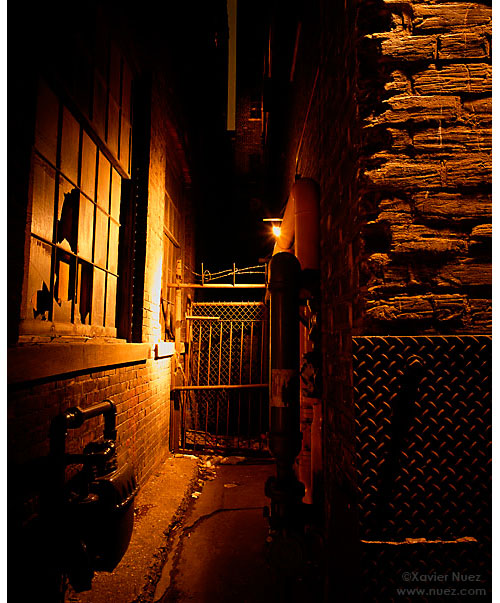
Alley no. 103, Angel Luis (2008, Compton, CA, 12:30am)
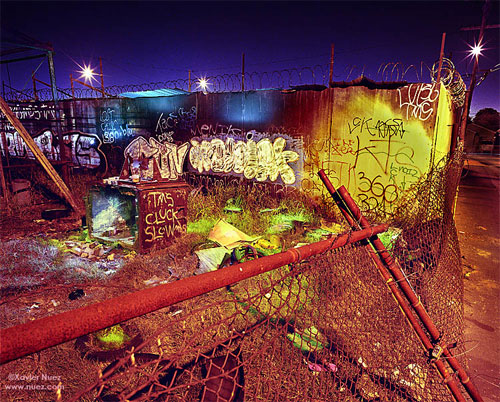
Alley no. 63, Smash (2004, Detroit, MI, 1:30am)
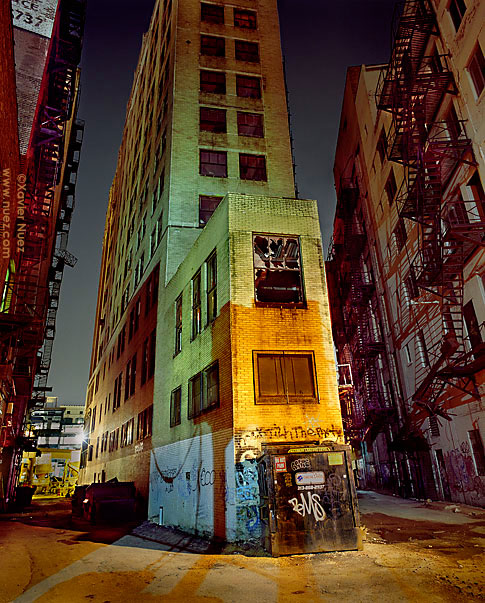
Alley no. 105, Time is tickin (2007, Seattle, WA, 12:15am)
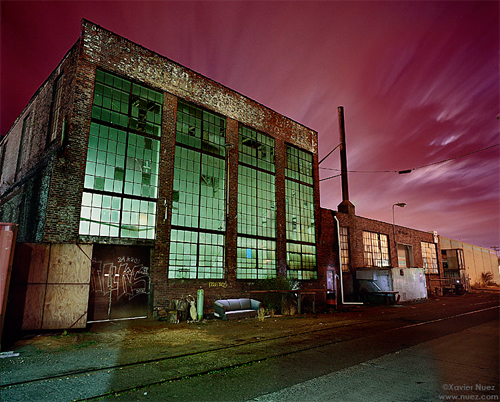
Alley no. 98, Misstep (2007, Phoenix, AZ, 11:30pm)
Nefertiti Egypt fine antique reproduction furniture, French, hotel furniture, hotel renovation supply