
A massive urban sculpture envisaged by Isamu Noguchi
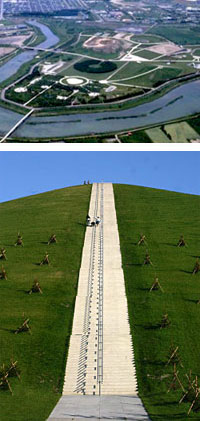 Seventeen years after Isamu Noguchi's death, his last work has been realized in the northeastern part of Sapporo as part of the city's annular greenbelt. Moerenuma Park was sculpted out of a 198 hectare waste disposal site which Noguchi specifically selected during his visit in March 1988. Noguchi completed the master plan of the park before his death later in 1988.
Noguchi believed that art and sculpture should be useful. His proposals for large-scale sculptures in the public realm date back to the 1930's, and he was especially drawn to the notion of play sculpture, though only one of his playgrounds was completed during his lifetime. Many of Noguchi's unrealized concepts were integrated into the design for Moerenuma.
The park was completed in July of 2005 under the guidance of the Isamu Noguchi Foundation, architects Shoji Sadao and Junichi Kawamura (longtime Noguchi collaborators), Kitaba Landscape Planning, Park Director Hitoshi Yamamoto and city officials.
Link: Moerenuma Park (Japanese)
Link: Green City Sapporo (Japanese)
Link: Sapporo City - Moerenuma Park and Isamu Noguchi
Link: Isamu Noguchi Garden Museum Japan
Article: Japan Times - Filling an emptiness with public play
Article: Asahi Shimbun - Ingenious Vision/Moerenuma a sculpture that doubles as playground
Related: California Scenario (L+L)
Related: The Isamu Noguchi Garden Museum (L+L)
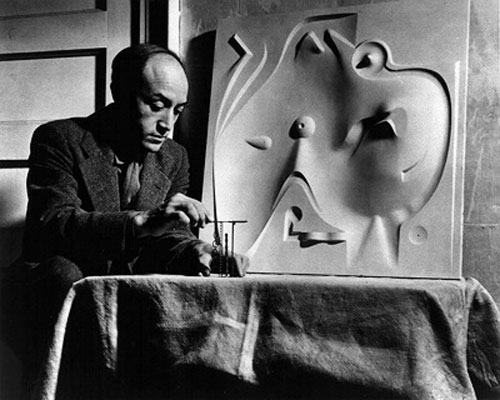
Isamu Noguchi with models of playground equipment and Contoured Playground, c.1941
(Photo © Noguchi Foundation)
Noguchi was inspired by many historic references such as the caves of Lascaux, Egyptian monuments, the Maharajah Jai Singh observatory in Jaipur and Machu Pichu.
View Land+Living Maps in a larger map
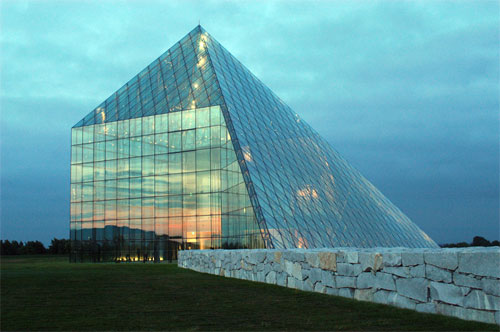
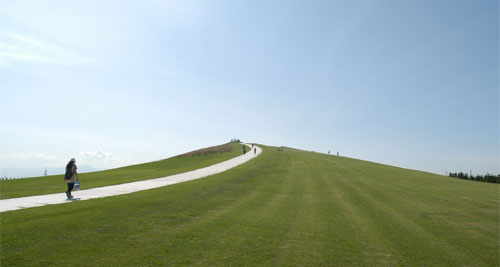
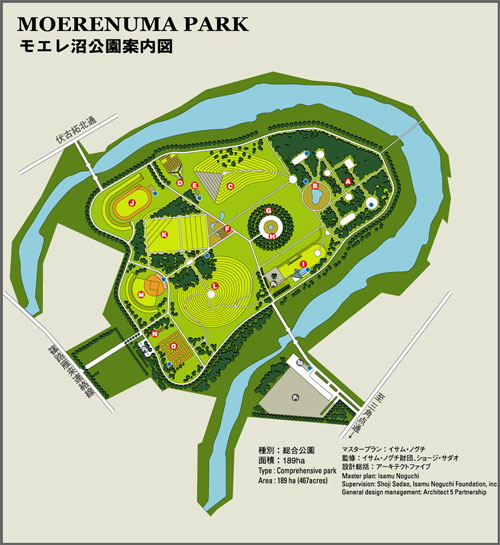
A - Sakura-no-mori cherry wood (play areas) // B - Moere Beach // C - Play Mountain // D - Tetra- mound // E - Music shell // F - Aqua plaza // G - Forest of color pine H - Sea Fountain // I - Hidamari (Glass Pyramid) // J - Track and field place management ridge // K - Field stage // L - Moere Mountain // M - Baseball field // N - Field house // O - Tennis courts
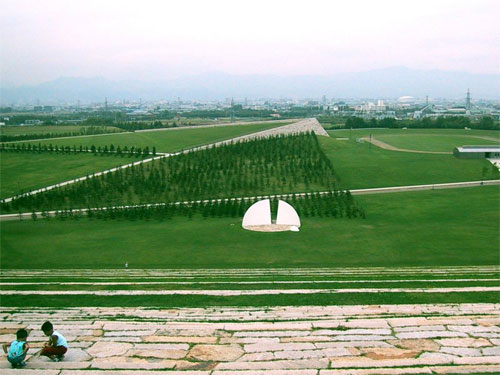
View from Play Mountain
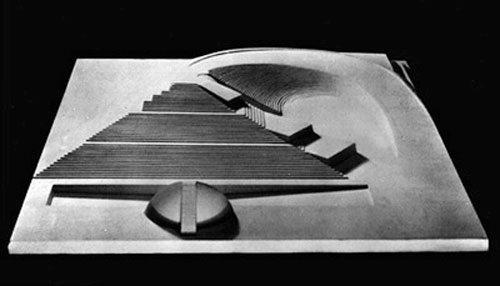
Model of original (unrealized) Play Mountain proposal, 1933
(Photo © Noguchi Foundation)
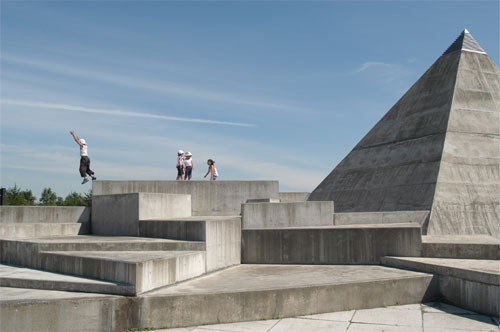
Sakura-no-mori
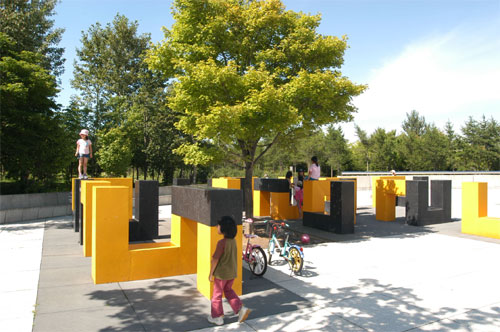
Moere Beach
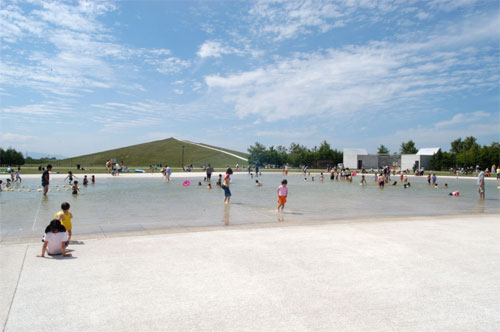
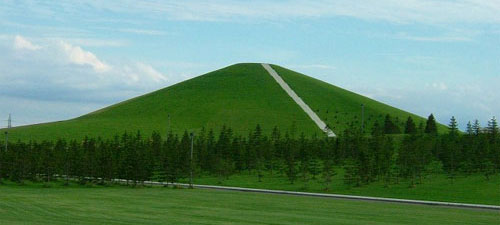
Moere Mountain
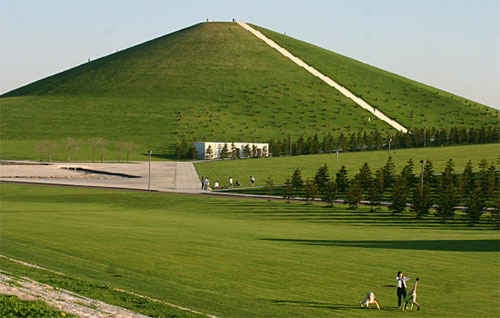
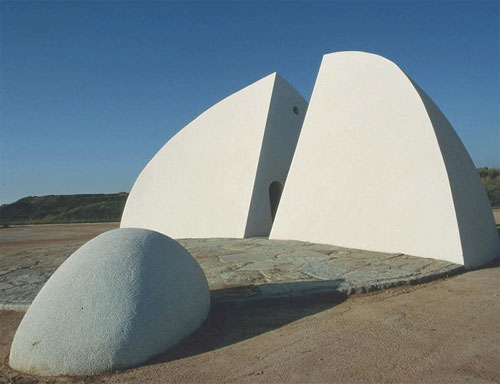
Music Shell
Hidamari cultural center