

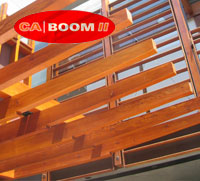
 I have been a fan of this house since the first portion was built some years ago, and was able to tour the expanded home last year at CA Boom. When I saw that the home would be featured again this year, I was not disappointed... actually I was excited to have the chance see it again. I hyped this tour above all others to Anthony as CA Boom approached, and upon our visit, his enthusiasm matched mine as is evident in the wealth of images in our extended photo gallery.
Photo Gallery: McKinley Residence
Link: Syndesis / David Hertz AIA
Article: Outside
Reference: CA Boom II Day One (L+L)
Reference: CA Boom II Day Two (L+L)
Reference: CA Boom II Day Three (L+L)
Located in Venice, California, the McKinley residence is the personal home of architect David Hertz and his family. When the first stage of the house was built, it was a pioneering example of integrating environmental strategies. The house features a solar hot water system and a solar radiant heating and cooling system embedded in the concrete floors and walls. Ventilation is accomplished with automatic skylights and windows which open when the house warms up, and close as temperatures cool or when if rain falls. Natural ventilation is also accomplished by ample use of screened combination doors and hopper windows. Solar panels also generate most of the electricity used by the home. The construction and finish materials throughout the home are natural and nontoxic. An article from April's Outdoor magazine (linked above) talks more about the eco-techniques.
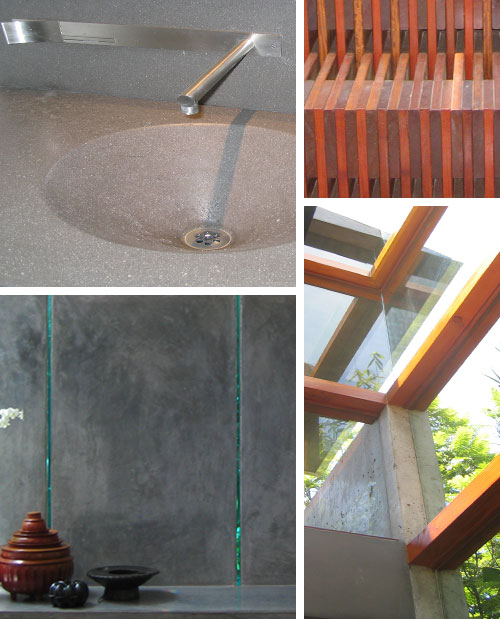
(CLOCKWISE STARTING AT TOP LEFT) SYNDECRETE COUNTER WITH INTEGRATED SINK AND BACKSPLASH; FINGER-JOINTED STAIRWAY IN THE ADDITION; WINDOWS TRIMMED WITH FIR AND CONCRETE; CONCRETE BENCH AND WALL WITH EMBEDDED GLASS STRIPS.
In addition to his architecture practice, David Hertz also runs a company called Syndesis which produces concrete based products using a technique which he invented.
Sydecrete is a solid surfacing material (pre-cast lightweight concrete material) developed by Architect David Hertz as an alternative to limited or nonrenewable natural materials such as wood and stone, and synthetic petroleum based solid and laminating materials.The house is a laboratory of sorts where the architect has experimented with materials, applications, details and concepts. All counter tops, sink basins, tubs, showers, and fireplaces are cast of Syndecrete. Other concrete techniques employed include: rammed earth site walls; poured in place concrete walls, furniture and floors; and integrally pigmented stucco and plaster.
The original site was a tight 40 by 90 foot lot. The building was designed as two pieces with the living spaces at the front on the ground floor and master bedroom suite above. The garage was built to the rear alley with two bedrooms above. The arrangement formed a courtyard at the center of the lot with glazed bridge connecting the two structures at the upper level. Balconies and roof decks expanded the outdoor living space.
The later expansion of the house onto an adjacent lot (doubling the size of the property) was not an originally contemplated a possibility. The addition reconceived the house as a larger courtyard home, positioning the L shaped extension at the extreme edges of the property. Carrying out the same concepts of the original house, the addition continues idea of separate pavilions; in effect the house is now four separate buildings linked by three enclosed bridges. The new ground level features several indoor/outdoor rooms with large sliding doors that disappear when opened. A swimming pool occupies the large void at the center of the home, and courtyard spaces weave throughout the property.
Click here for McKinley Residence Photo Gallery
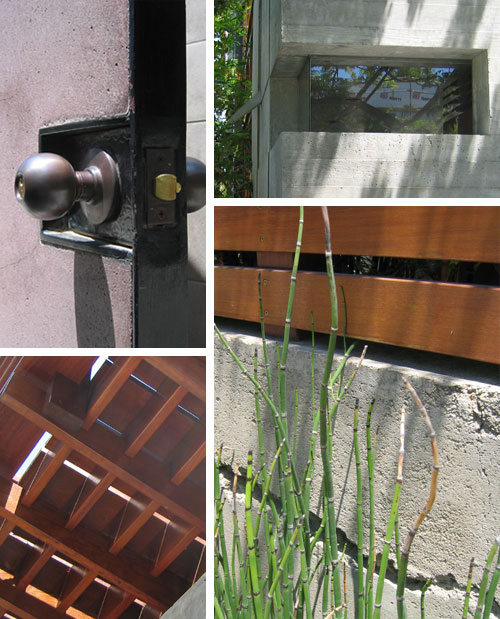
(CLOCKWISE STARTING AT TOP LEFT) CAST CONCRETE FRONT ENTRY GATE WITH STEEL FRAME; STEPPED BOARD-FORMED CONCRETE WALL WITH FRAMELESS CORNER WINDOW, ALSO NOTICE ANGLED METAL SCUPPER AT LEFT; RAMMED EARTH SITE WALL TOPPED WITH WOOD FENCE, EQUISETUM (HORSETAIL) GROWING IN FRONT; UNDERSIDE OF SECOND LEVEL DECK FRAMING.
McKinley Residence
Wood
Poor GUI
We try our best...
Just curious...
wondering...