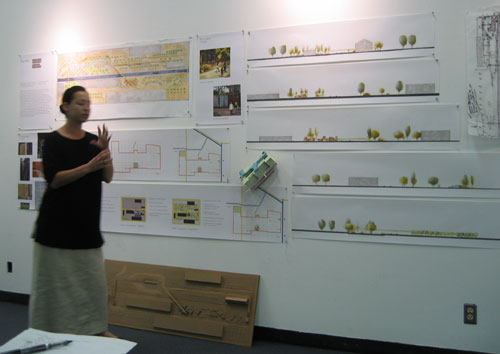

 The saga continues... sorry for the brief delay. I had been waiting in hopes of adding some more images which I will explain below.
And as the review continued on, we were plied with Jesus Juice... ahem... actually, we were treated to tasty homemade wine. Apparently one of the students makes batches of wine aged in her closet... quite impressive really.
This entry will complete the feature on the BrownLAb studio, and I must say that I thoroughly enjoyed the opportunity to see the work of this hardworking group of students. These small images and brief descriptions presented here are barely a glimpse into this vast project.
Harmil Raikhy
ComPark
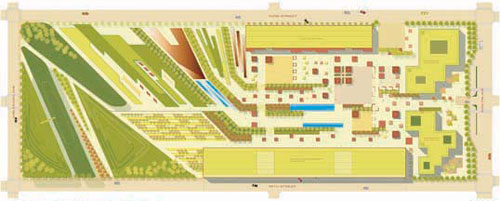
SITE PLAN
What at first made me think of a telecommuncations company was actually Harmol's combination of words: "Com" for community, commerce, creativity, communication and contentment, and Park for its obvious definition.
A graphically striking plan created a strong sense of movement through the site. The park morphs from urban on the east where a large commercial building forms a gateway and gatherine area, to open green recreation space on the west. The two areas are connected by a strips of open area for shifting programatic uses.
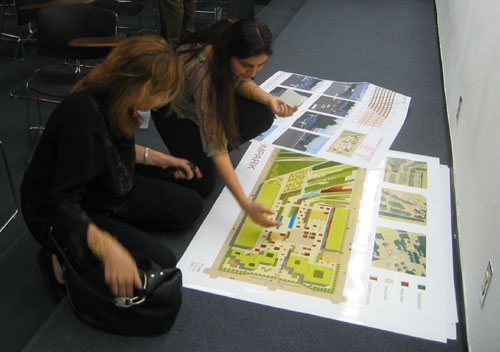
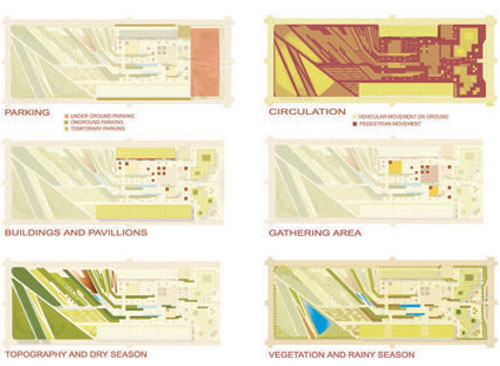
INFRASTRUCTURE DIAGRAMS
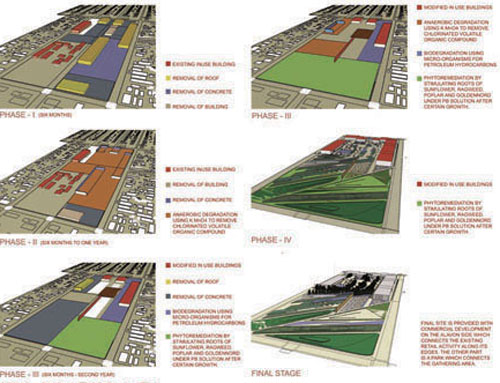
PHASING DIAGRAMS
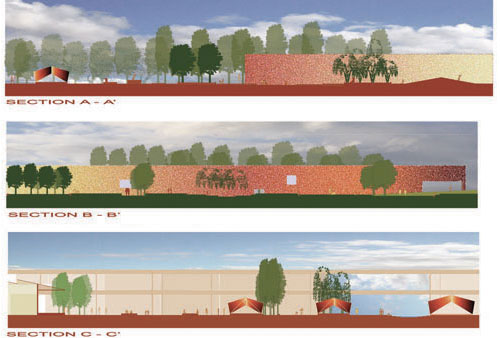
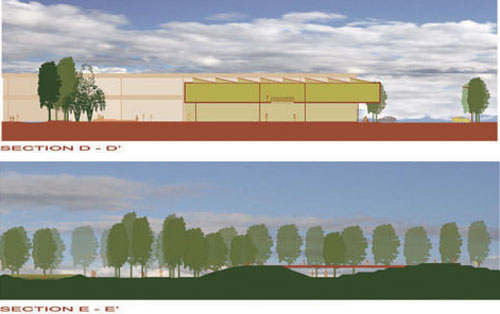
SECTIONS
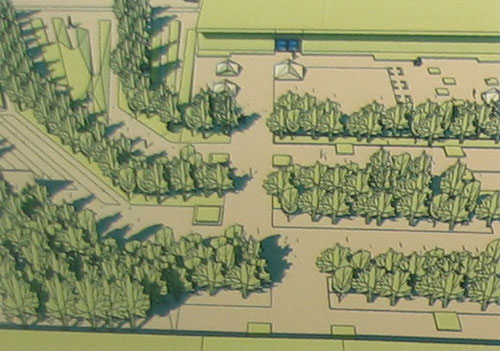
OVERHEAD PERSPECTIVE
Kay Sales
The Yard
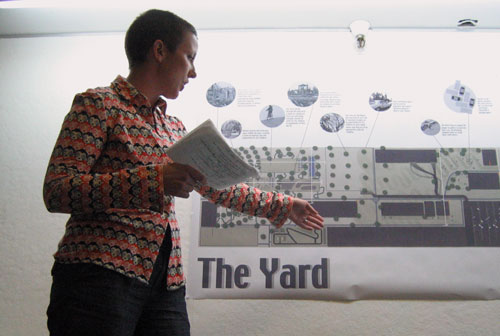
First off, I must apologize to Kay for my lack of images... my other shot did not turn out, and I was unable to get many photos at the review since she was not able to pin up until the end while we were reviewing other work. I felt like Kay got the short end of the stick being the final project to review... and we were running very late. Sadly, now I am giving her the short stick again.
Kay, a U.K. native, approached the project from an outsider's point of view, interpreting in American culture > Los Angeles > the neighborhood in an interesting way and projecting her observations onto the site. The result is an automobile oriented leisure space. Ironically, the Yellow Cars were made obsolete by cars that now have also taken over this last remnant of the system.
The program called for a communal auto work yard, workshop space, carwash, gas station, green space, and an instructional program for youth including art, welding and woodworking. The largest building would be repurposed as a self-storage facility that would provide funding for the rehabilitation of the site and support the programs. Kay’s research indicates that the facility would pay for the project within 20 years.
Perhaps due to Kay’s wry British presentation, we American jurors were not too quick to pick up on the intentional irony of her proposal. Once we had concluded, I was able to notice other details within her drawings showing tire-track pathways, and other ironic features and twists that helped to connect the dots a bit.
Naomi Sanders
Flux Park
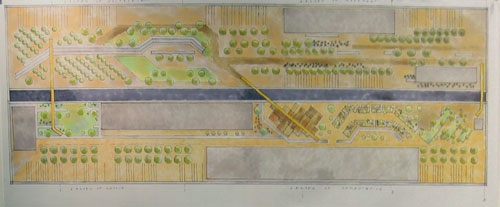
SITE PLAN
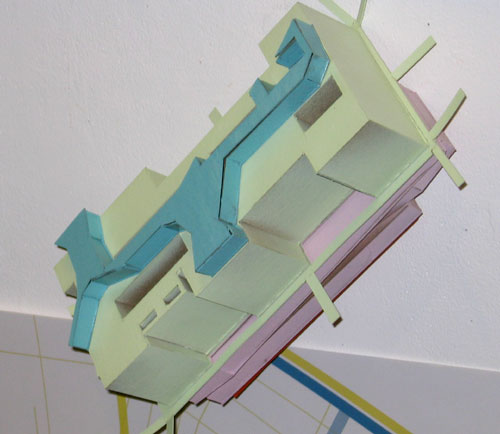
Inspired both by the history of the site, the proximity to the MTA Blue Line and the Central City, Naomi saw the site as an opportunity for transit oriented development. The program included a transit hub and passenger facilities, park-and-ride, commercial space including the swap meet, and gardens.
This was the only proposal to leave the central east west axis as a vehicular thoroughfare. The site was then separated into 4 zones/garden spaces based on a study of the 4 defunct Yellow Car zones of the city, creating a "garden of movement," "garden of nostalgia," "garden of repose," and "garden of remediation."
The existing structures on the site are rehabilitated or dismantled and recycled on-site. The most contaminated soil is gathered into the central "garden of remediation" where it is contained within containers created from the discarded building materials of the site. These large planters create raised remediation gardens with an elevated walkway passing above.
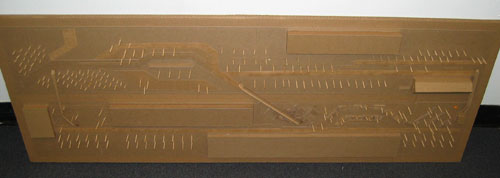
SITE MODEL
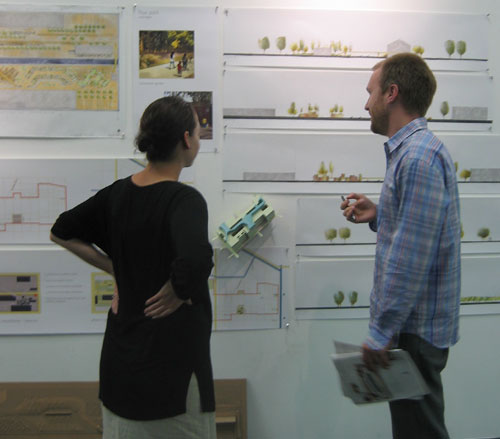
VSITE ANALYSIS STUDY MODEL