

 About half way through the review, we were treated to goodies from India Sweets and Spices... mmm mmm mmmmm. I wish I could share the same with you since we are now half way through our coverage of the studio, but sorry to say you're on your own.
Let's get back to the relevant topic. Part of the research for the studio included the study of brownfield and reclamation precedents including Westergasfabriek, the High Line, work by Peter Latz, etc. These kinds of projects are very exciting and make landscape architecture so very relevant in the world.
Jillian Morgan
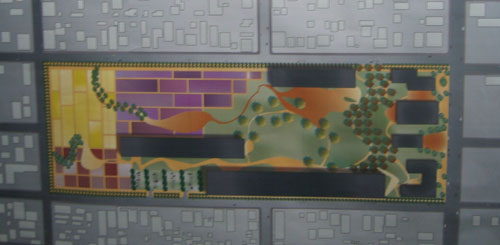
SITE PLAN
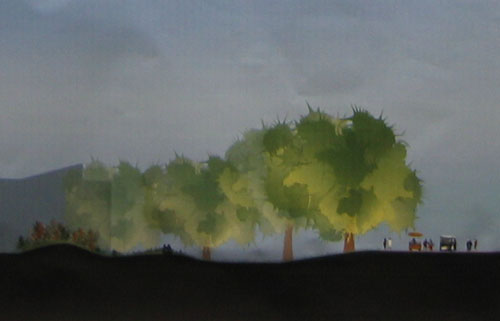
Jillian used a narrative approach to the project based on the health of the site (a cancer), and a healing process (remediation). The site would be dissected, categorically sorting the most contaminated soil into separate remediation plots which would each be treated through different planting remedies (these strips are easily seen as red, yellow and purple plots on the west side of the site plan). The mid section of the site would be an organically formed recreation spaces planted with cleansing tree species.
The program for the site adaptively reuses the existing structures for the swap meet, retail space (along the eastern edge) and a USC Environmental Design school extension that would use the remediation plots as a laboratory.
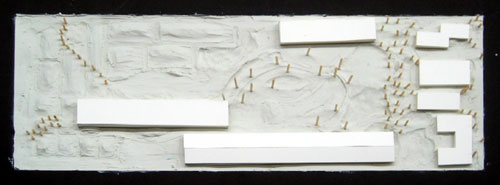
SITE MODEL
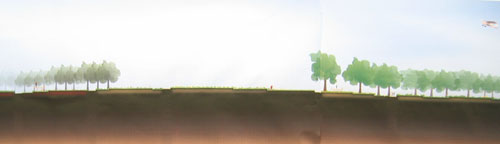
SITE SECTION (fragment)
SITE SECTION (fragment)
Amy Morie
Nested Efficiency
SITE PLAN
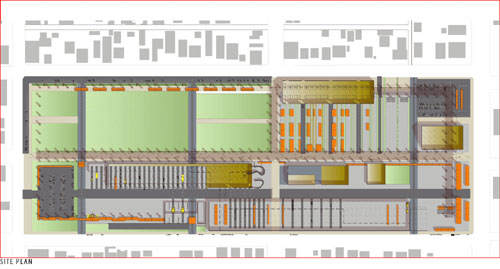
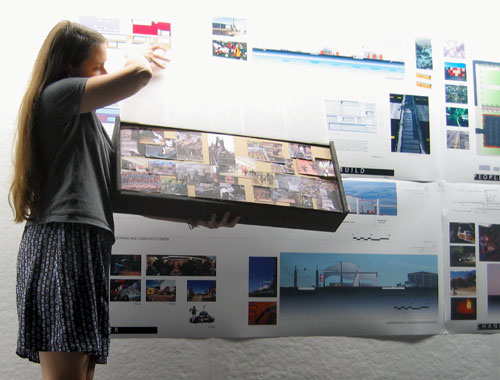
Amy concived of a design solution based on a concept of nested efficiency derived from the historic function of the site. Each unit of compartmentalization (capable of emerging from within the other to form new spaces) serves the site through its mass and function, forming interiors, exteriors and backdrops in a reconfigurable landscape. She carried this concept from her analysis of the site including a collection of artifacts housed in a partitioned box, study models, though the final result.
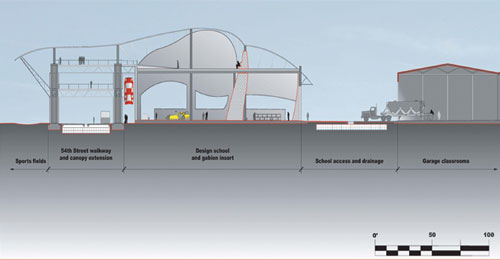
The proposed program for the site includes an auto design school, swap meet, transit center, retail space, and an infrastructure of columns with utility hook ups to support transient uses. The idea of the mobile compartment-driven site can accommodate the day-to-day demands of its functions, yet allows it to unfold itself, changing configuration to host large-scale school visits, auto shows, carnivals and even disaster-relief scenarios.
SITE SECTION AT DESIGN SCHOOL(fragment)
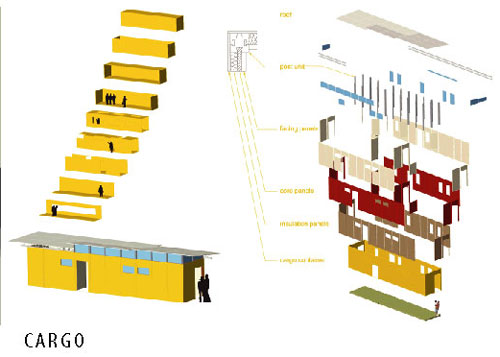
COMPARTMENT SYSTEM
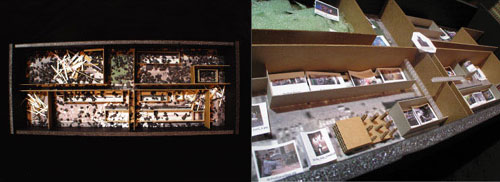
STUDY MODELS
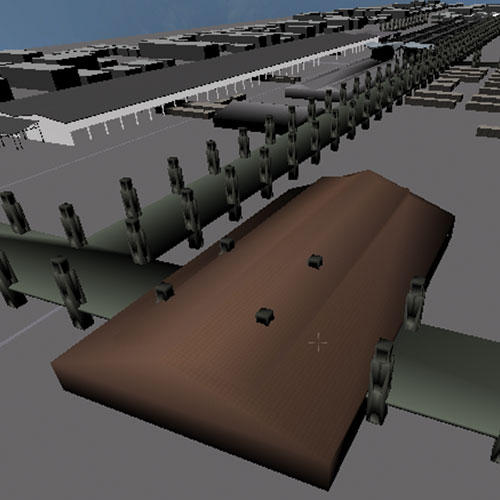
OVERVIEW OF SITE
Ray Nagahata
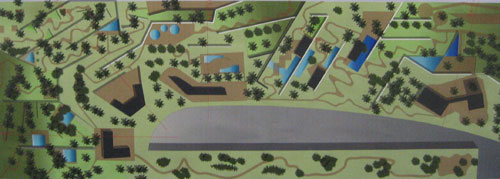
SITE PLAN
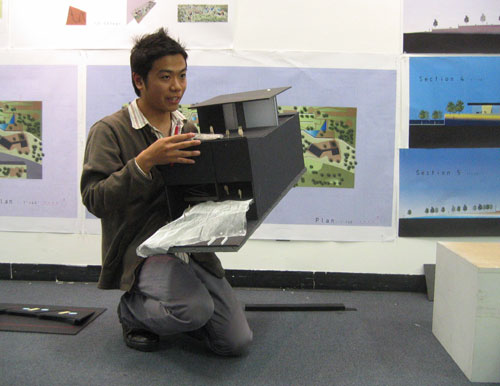
With a farsighted view of the proposal, Ray not only took on the contamination located onsite, but went so far as to propose a proposal for remediating the nearby Goodyear Tract (more than 20 times larger) as well.
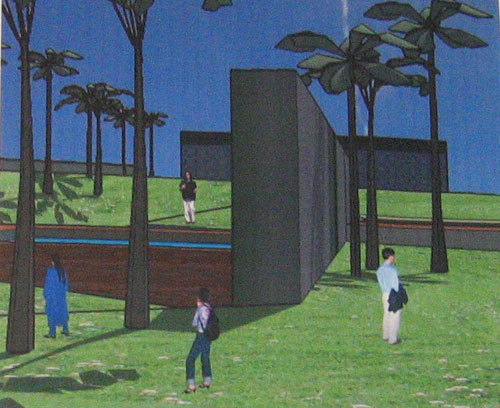
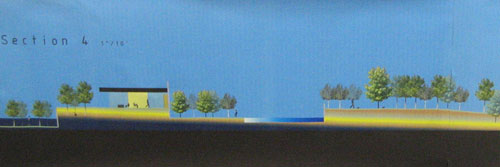
An infrastructure would be built along the southern edge of the site for receiving and processing the contaminated waste. A rail car system would then distribute the resulting fill systematically from west to east creating a raised landscape over a 50 year period. This mound would cover subterranean structures such as the processing facility, but also space programmed with community functions, each featuring pavilions and lantern structures atop the hill providing light and access.
PRESENTATION
PERSPECTIVE
SITE SECTION (fragment)