

Revisiting Owens Lake
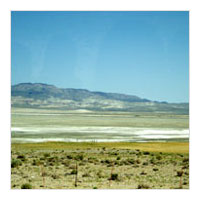 While this might not really fall under the guise of Modern Lifestyle & Design, this is actually an issue that we've followed over the years and if you're an LA resident, an issue that has had an enormous impact on modern LA society. As noted on our about page, we're avid snow sports enthusiasts and during our pursuits for Sierra Nevada snow, we pass by Owens Lake several times each month. It's nice to read about the efforts the LA DWP is making to restore Owens Lake in a publication such as Metropolis.
"Today, parts of Owens Lake look like a sandy desert floor, parts are under a few inches of water tinted red from algae, and still other parts are covered with a thick salt crust. The lake is the largest stationary source of pollution in America; its amount of wind-blown dust violates EPA standards of particulate matter 20-30 times a year. The EPA’s standard is 150 micrograms per cubic meter; levels measured at the lakeshore reach 12,000.Link: MetropolisNow the DWP is trying to reverse the damage it did to Owens Lake. The Department has tapped into the aqueduct to re-direct up to a quarter of the flow back into the lakebed, and is using a combination of shallow flooding and managed vegetation to bring the water body within EPA standards. The project is scheduled to end in 2006 with 29.8 square miles treated.
Related: Trees for a Green LA
Images: © Krystal Chang
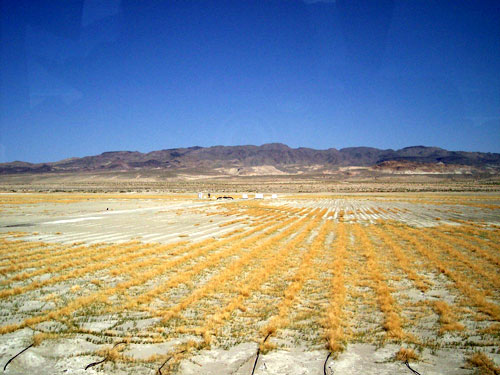
"Once a body of water 100 square miles wide and 30 feet deep, Owens Lake is now a dry bed that generates unhealthy levels of wind-blown dust. To help curb that pollution, the Los Angeles Department of Water and Power has embarked on a combination of managed vegetation and shallow flooding to bring the area within EPA standards. Planted here on the lake bed is salt grass, a species native to the area."