NYC adopts a new standard for urban construction sheds
We
posted an announcement last August for the "urbanSHED International Design Competition," and Young-Hwan Choi, a 28-year-old graduate student from the University of Pennsylvania, heeded the call* and won the $10,000 cash prize. So how about showing L+L a little love, wontcha, Young? A little sumpthin' sumpthin'... anything? No?
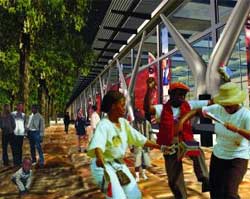
Mr. Choi's concept, the Urban Umbrella has been adopted by the New York City Department of Buildings as a new standard. While use of the design by contractors will not be mandatory, the Department reports that the installation costs are "in line" with the current standard and that long term maintenance and installations costs for the new structures will be lower. Also of note is that the new design will obstruct less of a building's facade which would appeal to building owners and affected businesses.
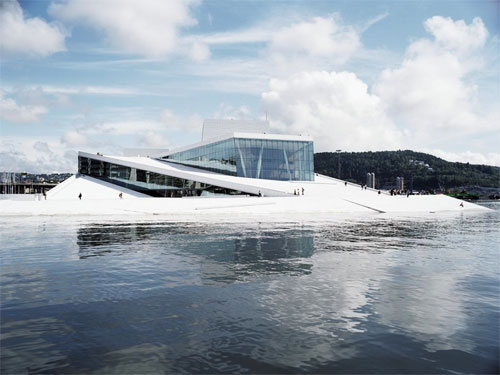
This landmark building in Oslo by Snøhetta (Kjetil Trædal Thorsen, Tarald Lundevall, Craig Dykers) is the
largest cultural centre built in Norway in 700 years. The competion brief stated that the operahouse should be monumental in it’s expression. Snøhetta's interpretation of monumentality is a concept of togetherness, joint ownership, easy and open access for all which is manifested in the warping roof plane making the an extended piece of civic public space. Monumentality is achieved through wide horizontal extension and not verticality. Integral to the 1,000-room interior, which is largely lined with crafted woodwork (using the traditions of Norwegian boat builders), are a number of art commissions interwoven into the structural fabric, including a cloakroom, a collaboration with their 2007 Serpentine Pavilion collaborator Olafur Eliasson.
The European Commission and the Fundació Mies van der Rohe announced today that the Norwegian National Opera & Ballet, Oslo, Norway by Snøhetta is the winner of the European Union Prize for Contemporary Architecture – Mies van der Rohe Award 2009.
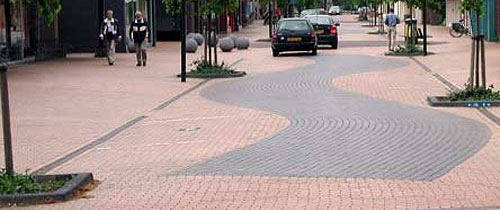
More than two years ago, I read an article by LA based journalist Sam Kaplan talking about what he called "woonerfern," a Dutch concept of street design which blurs the boundaries of traffic separation and use. However a quick web search for "Woonerfern" will turn up nothing other than references to this article by Mr. Kaplan, and using a Dutch-to-English dictionary was no help either. A bit more research, and AH-HA! I discovered the term "Woonerf" (or the plural "Woonerven"), a concept developed in the late 1960's and early 70's which is credited to the late Dutch civil engineer Hans Monderman, who's philosophy of road design throws out the conventional wisdom that driving and walking are incompatible and that traffic must be directed and controlled by signals and signage.
The concept has evolved into numerous variations of philosophy: Home Zones, Shared Space, Living Streets, New Mobility, etc. But never mind what it is called, the concept of a street serving multiple functions is an interesting one. It expands the possibilities of walkable, sustainable cities which accommodates the automobile, but emphasizes and encourages alternate modes of movement and inhabitation of the street-scape--linear public space. Plus, it is just a good era to revisit 'infrastructure' rather than, say, sexy modern mountain vacation homes. So, let's take a look at shared spaces, shall we?
Link: Salon - Why don't we do it in the road?
Link: NY Times - A Path to Road Safety With No Signposts
Link: Wired - Roads Gone Wild
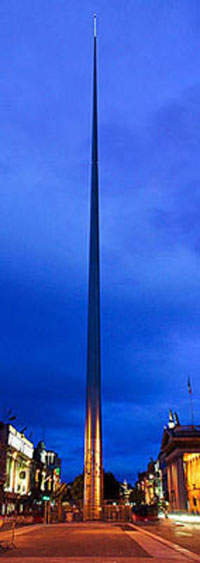
A day on which one can't help but think of monuments and symbols seems like an appropriate time to take a look at a successful modern monument... at least Witold Rybczynski thought so, and it got me to thinking about it as well.
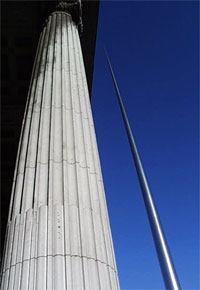
The Spire of Dublin, also known as An Tur Solais (the Monument of Light) and The Spike... it also has some unsavory nicknames in the Dubliner tradition: The Stiletto in the Ghetto, The Nail in the Pale, The Binge Syringe, and (perhaps my favorite) The Erection in the Intersection.
The monument was conceived in the early 1990's to provide a replacement for Nelson's Pillar which was blown up by former IRA members in 1966. An architectural competition was held with the intention of building the monument in time for the millennium. Alas construction was delayed by a pair of lawsuits filed by failed competitors - one designed a resurrection of Nelsons Pillar but topped by a bronze sun, the other a column topped by a revolving restaurant...
Of course monuments are contentious by their very nature - e.g. Ground Zero, Alex Eiffel, World War II Memorial in Washington, D.C., etc. And the sore losers of the competition weren't the only detractors of the winning entry - public opinion and politicians decried the monument citing its inappropriateness to the context, the exorbitant cost and everything in between. Not to mention the planning process and environmental regulations (EIS). It is a wonder it was ever built at all... and so it is perhaps a fitting symbol of the new Ireland where such things are possible. And yet that uncovers an ironic twist: this monument of the new Ireland, built to replace a symbol of British imperialism, was an entry by a British architect, Ian Ritchie.
How else would Reyner Banham tour Los Angeles but by car? Take a circa 1972 ride through Los Angeles with the architectural critic and author of Los Angeles: The Architecture of Four Ecologies as he visits the Plains, the Foothills, Surfurbia, and (of course) Autopia. It is amazing to see how much Los Angeles changed in the last 35 years, and yet how relevant Banham's observations still are. Awesome.
We'll get back to modern day Los Angeles with more coverage from CA Boom 4 shortly... stay tuned.
Modern urban redevelopment projects generally have a bad rap, with conclusions batted about of the failure of modernism to produce livable communities. Not all modernist developments met the same fate as Pruitt-Igoe, however. Shining examples of modernist planning are scattered around the world which deliver on the promise that modern visionaries hoped to fulfill.
One such example is the highly successful Lafayette Park (Gratiot Park Development) in Detroit Michigan designed by architect Mies van der Rohe, planner Ludwig Hilberseimer, and landscape architect Alfred Caldwell.
Jeremy Goldkorn of Danwei provides a tour of construction in Beiging including the CCTV building by OMA, the National Theater by Paul Andreu, the National Swimming Center (Water Cube) by PTW and the Olympic Stadium by Herzog & de Meuron.
A social oasis in the urban environment... she's electric
Nothing to do with the UK national treasure... the London Oasis is a temporary structure on Clerkenwell Green installed as part of national Architecture Week. It is a kinetic sculpture by architect Laurie Chetwood designed to demonstrate sustainability and renewable energy while providing entertainment, a place for meeting and tranquil space for Londoners. Self-sufficiently powered by solar cells, a hydrogen fuel cell and wind, the Oasis interacts with the environment around it. Shade providing "branches" open and close in response to the weather. Enclosed pods at the base provide a place of seclusion for people to rest with "cleaner cooled air and relaxing sounds." At night the Oasis acts as a beacon in the cityscape with lights which repsond to the movements of people around it. It even uses rainwater it has collected for irrigation and cooling.
An exhibition at the Barbican Art Gallery in London running June 15, 2006 - September 17, 2006.
From extraordinary houses and incredible towers, to fantasy cityscapes and inhabitable sculptures, Future City showcases the most radical and experimental architecture to have emerged in the past 50 years.
From the visionary artist-turned-architect Constant Nieuwenhuys, to 1960’s giants Archigram and SuperStudio, to deconstructivists Daniel Libeskind and Zaha Hadid and contemporary digitally inspired work by Nox and Decoi, this is the most comprehensive survey of experimental architecture to be held in the UK.
The exhibition marks the re-launch of the CUBE gallery in Manchester, UK
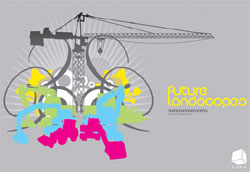
The exhibition Future Landscape shown at CUBE, Manchester, has now come to an end. Over the two months of being opened to the public, the exhibition has gathered under one collection several projects, bridging Architecture and Landscape, which, in a near future, will shape the North West region of England.
Projects of prominent architects based mostly in the region were thus displayed to give the opportunity to the public to gain an insight on how the region will be shaped in the years to come and also to express their views on such regeneration projects.
Varied graphic styles, design approaches and thus resulting design-forms were highlighted by this exhibition which brought to the viewer an understanding on the diversity of the projects and their suitability for the chosen sites.
Through walking and observing the works on display, the viewer was certain to find a project which stimulated his/her imagination.
St. Patrick's Day seems an appropriate time to get back to my series on Ireland. Having looked at Dublin, both at large and in particular, this time I will focus on a particular district: Temple Bar.
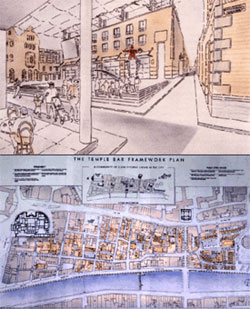
Temple Bar was the pioneering effort of contemporary urban regeneration in Dublin in the early 1990's. An architectural competition to create a framework plan for the district was won by a unique group of young architects who collaborated as Group 91:
Shay Cleary Architects
Grafton Architects
Paul Keogh Architects
McCullough Mulvin Architects
McGarry NiEanaigh Architects
O'Donnell + Tuomey Architects
Shane O'Toole Architects
Derek Tynan Architects
The Temple Bar Architectural Framework Plan outlined architectural and urban design proposals which provided for sensitive, but bold thinking urban renewal. The result has turned Temple Bar into one of the most vibrant areas of the city with many award-winning modern buildings which integrate into the historical fabric of the city.
NYIT studio explores the big box invasion into urban territory
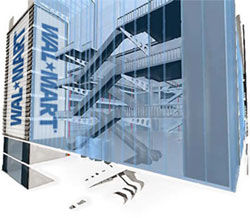
When the unstoppable Wal-Mart comes to town, there is sure to be a struggle, and the push to open big box stores in more urban areas has been no different - in fact it has raised new issues as can be seen in the current proposed New York City location.
A studio 3rd year studio at NYIT led by Matt Dockery explores "a hybrid public / private venture designed to allow New York City to reap the benefits of low-cost merchandise without suffering the negative impacts of Big-Box stores on public space, local business and the environment."
The site used by the studio is in Brooklyn adjacent to the proposed Atlantic Yards project designed by Frank Gehry. The charge to the students is to create a new building type to house a mixed program: big box retail, a public arts market, assembly hall, public services, and a parking garage.
Landscape Architecture Masters Thesis by Veenu Jayaram
Veenu Jayaram was among the landscape architecture students I met when I sat on the jury for the BrownLAb studio at the University of Southern California Landscape Architecture program. She recently completed her graduate work, and contacted us to share her thesis project.
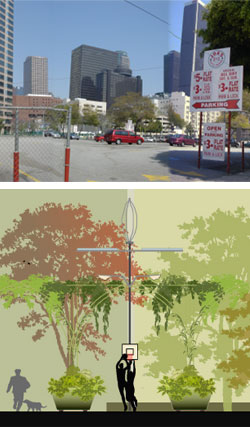
Examining the patchwork of surface parking lots in Downtown Los Angeles Venu saw an opportunity for intervention realizing that these parking lots occupy much of the land in the Central Business District, yet are only utilized for limited hours, and for the limited purpose of temporary vehicle storage. She proposed that parking lots can serve a more dynamic program that recognizes economic realities while serving the multiple needs of the urban environment.
The proposal takes into account the studied needs within the CBD for the existing and growing residential population in addition to the daytime workers. New infrastructure, planting and programming strategies allow the space to be more flexible while remaining compatible with the need for parking space.
Derelict. Dilapidated. Discover. - Interventions in urban decay
Detroit is one of the most spectacular examples of boom and bust in the United States - once opulent and then blighted - this capital of the Rust Belt is one of the nation's fastest shrinking cities and prime example of the phenomenon of "white flight" and, subsequently, sprawl. Large numbers of buildings and homes have been abandoned and many have been torn down or have fallen down and cleared away. Yet many vacant buildings remain in various states of decay.
Preceding the recent Super Bowl held in Detroit, an anonymous group calling themselves the DDD Project (Detroit. Demolition. Disneyland.) began targeting highly visible abandoned structures for intervention. Marked with a circled "D" in chalk by the city for demolition by the city years prior, the DDD Project transformed the houses, creating highlights within a context of depression, with a coat of bright orange paint, covering every surface of the facade: "Every detail is accentuated through the unification of color. Broken windows become jagged lines. Peeling paint becomes texture."
Michael Wolf is a photographer who captures the residential condition of Hong Kong as a portrait of both density and abandonment. The repetitive patterns of apartment buildings showcases order at its most extreme producing a visual lull that is both attractive and arresting. The majority of images were captured at unknown heights creating a boundlessness that is uncomfortable, but outweighed by the intrigue. Michael Wolf's truly engaging study can be found in Kenneth Baker and Douglas Young's Hong Kong: Front Door / Back Door.
Getting back to Ireland as promised, let's take a look at some modern Irish architecture in Dublin. Although Adriean did not tag along with my wife and I on our trip... at least not that I know of... he was feeling the Irish architecture vibe as well with his post highlighting some of this year's RIAI (Royal Institute of the Architects of Ireland) award winners.
Following is more of what I have seen in Dublin... I will sprinkle some comments in with the photos. For those who want to dig deeper, check out The Reflecting City. This site is part of a current mixed media exhibition detailing the urban transformation in Dublin over the past decade. The site allows you to delve into the history, present and future of city via an interactive zoned map. The site focuses on nine districts and provides related images, interviews, virtual tours and abundant information related to the community, planning and projects.
Panel Discussion: Small Lot Subdivisions and New Housing Typologies
A panel discussion with City Planning officials, architects, and developers will be held on Saturday, November 5, 2005 from 11am-3pm.
cityworksLosAngeles is staging a panel discussion on the subject of the Small Lot Subdivision Ordinance and its potential to allow new models of affordable housing. Join a lively discussion moderated by Mark Surdam of Enterprise Home Ownership Partners and Frances Anderton of KCRW's DnA in advance of an upcoming design competition intended to probe opportunities afforded by the ordinance.
Student project for the Salford Docks site in Manchester, U.K.
We first "met" Lorenza Casini, a student in the Materiality College at Manchester School of Architecture, when she contacted us last year regarding our post on MPreis supermarkets in the course of her research for this project. We are very pleased now to share the finished product now with you.
With an abandoned brownfield site chosen by the instructors, the studio presented an urban design and architectural design challenge: to propose a program for the site and to develop the architectural scheme.
Lorenza's proposal merges architecture, landscape, infrastructure, and food supply chains to develop an urban farmland and public space in the heart of Manchester.
A 'city within a city' is a phrase used in Japan to describe a cluster of buildings connected by industry type, restaurants, recreational facilities and occasionally residences. Shiodome Shiosite is one of Tokyo's newest complexes consisting of skyscrapers that house media giants like Nippon Television and Dentsu Inc., one of the largest advertising agencies in Japan.
The Caretta Shiodome is 51 floors of Dentsu inc. office space, restaurants and bars, museums and retail. However, stop at the 7th floor and find something different: an open concept project called My City designed by the interior design firm Super Potato Co. using 11 materials salvaged from the city to build walls and add texture and detail.
Need a reason to visit Montreal this winter? Montreal's underground city is a good enough one in my books. With its inception in 1966 the plan for the underground coincided with the opening of Montreal's Metro, and has since grown to include 1,500 offices and 1,600 boutiques. It also has numerous art installations, a skating rink, and leads you through historic and newly constructed buildings. For instance, you can go from IM Pei's Place Ville Marie to Claude Cormier's Lipstick Forest in the redesigned Palais des Congress in Old Montreal without ever surfacing.
SYN-, a collective that includes Luc Lévesque, Jean-Maxime Dufresne, Louis-Charles Lasnier and Jean-Francois Prost, have put together a unique study of the underground as part of an Urban Exploration Workshop. It highlights the underground as a viable and exciting intermodal experience. Their Web site includes maps and images.
Disneyland is not regarded fondly by the architecture and design community at large with it's faux castles, jungles and streets and oversized rubber-headed rodents gallivanting about. But there is no denying the genius of the planning concepts and methods pioneered and honed by Walt Disney and his "Imagineers" and the impacts that their work has had not only on American and international cultures, but also on the design professions.
At Disneyland, designers created the first physical space conceptualized as an interactive experience using cinemagraphic story telling devices to choreograph the free movements of visitors through a three dimensional fantasy movie. Sequences of spaces and transitions were carefully planned to combine disparate elements into a cohesive whole.
An article in the LA Times talks a bit about the influence of the park on everyday places such as malls and revived downtowns, "lifestyle centers" and other places where the distinction between fantasy and reality has been blurred beyond the gated and bermed Magic Kingdom.
CITYWORKSLOSANGELES, a volunteer based forum of members from the architecture and design community acting as a catalyst for real world solutions in Los Angeles, is holding a book launch event on July 28th from 5 - 8 pm at the Herman Miller Los Angeles National Design Center.
The CITYWORKSLosAngeles: HANDBOOK answers 4 basic questions:
1. What stops people from getting involved in making a difference in the world?
2. What are the major challenges facing our world?
3. What can the average person do in their everyday life to make the world better?
4. What are examples of community based and socially relevant design projects?
The book is priced at $10 and will be available for sale at this event.
It has been a little while since we have visited this topic, but an article in Metropolis by Karrie Jacobs ties into some issues we have touched on here before... so nice of Karrie to help us weave some things together.
The article covers some territory we have crossed before with some nice observations and observations. She provides a critique of the "need to use the past as a sort of architectural tranquilizer" and takes a look at the lifestyle center phenomenon, specifically talking about Victoria Gardens (see Downtown Mauled Part I & Part II). Though I would disagree with her stance which places blame for architectural pastiche squarely on New Urbanism as its agenda is more spatial than aesthetic.
"Affordable Landscapes: The growing numbers of blighted residential districts all over the world call for cost-effective ideas to upgrade public space."
Australian landscape architect Elizabeth Mossop has an interesting article currently at Topos about the state of the profession and the opportunities that landscape architects have to shape the world beyond the realm of "privileged landscapes" where their work has traditionally been focused.
The key to future directions in landscape architecture is to broaden our ideas of landscape practice. Future practice must encompass all types of landscapes and all landscape problems. Landscape issues must become an intrinsic part of all developments; therefore, landscape practice must become "affordable."
John Norquist responds to Mr. Greenhut's demonization of New Urbanism
John Norquist, president of the Congress for the New Urbanism in Chicago, provides a rebuttal that is admittedly more studied and level headed than our own in response to a scathing editorial published earlier this month in the Orange County Register by Steven Greenhut.
Some of the opinions and facts presented by Mr. Norquist seem to reveal that Mr. Greenhut may actually be a closet New Urbanist... or, more seriously, help to dispel many of the misconceptions about New Urbanism held by many.
We are heartened to see that Mr. Greenhut has chosen to engage in debate and will speak at the annual meeting of the Congress for the New Urbanism in Pasadena this June. If he doesn't drink the kool-aid, we will at least be interested to read a more educated editorial from Mr. Greenhut in the future.
"Malls are now being designed to resemble the downtown commercial districts they replaced."
Andrew Blum has come to some concerns and conclusions similar to our own when it comes to the lifestyle center phenomenon. In an article published today on Slate, he talks about the evolution of malls and the appropriation of "public space."
The lifestyle center is a bizarre outgrowth of the suburban mentality: People want public space, even if making that space private is the only way to get it.
Sometimes it doesn't matter what opinion I may hold when I read gibberish spewed by someone feigning authority. Mind you, I am not a journalist (most traditional journalists would be quick to point out that journalistic shortcoming of blogs), but I am an educated professional with experience, opinions and knowledge that give me some background from which to judge the worthiness of an argument within my field. I have read the opinions of many educated opponents of New Urbanism that I can respect, but an article published Sunday in The Orange County Register written by Steven Greenhut is not among them.
Now, I do not consider myself an expert in New Urban theory, but I do think that Mr. Greenhut is grossly misinformed. Or perhaps he just enjoys lighting a fire and fanning the flames. At any rate, he misses the concept that New Urbanism promotes a mix of housing types and income levels and that the principles can be applied to lower density situations. Mr. Greenhut has bitten off more than he can chew... and indeed more than can even be responded to in this format. Never the less, let's take an abbreviated look, shall we?
"The Land of the Rising Sun will not bow to the shrinking space"
As a follow up to the quasi-debate going on with regard to our post about The Very Small Home, here is an article that talks further with author Azby Brown about building smart in Japan... and elsewhere.
At Land+Living, we're all about functional space. Americans as a generalization may think that bigger is better... however we think that functional is better. Perhaps square footage is not so important as "well designed" usable space. Urban property values continue to spiral upwards (like for us in Los Angeles) forcing us to truly consider how we live and what we value.
(Azby Brown) suggests that the small house is actually superior to its larger incarnations and that, given a choice, the truly discerning are opting for life on the squeeze.
This project adjacent to Manchester’s city center aims to regenerate the former Cardroom housing estate, which itself was an urban renewal effort in the 1970's to reclaim an abandoned industrial sector. Poor planning contributed to the demise of Cardroom Estate, but a bold new framework by Alsop hopes to learn from the past while looking forward.
The area has been re-dubbed New Islington, and a new splashy flashy website (as noted at Archinect) details the concept for the new project and history of the neighborhood. Sustainability and context is the name of the game.
Virtually located - "brings the Yellow Pages to life"
This is an interesting concept, a web-based directory where you can actually see the block where a business is located, and browse the surrounding neighborhood. You got to wonder if this will actually work (especially fiscally). But I really like the idea of being able to find what else is located in the surrounding neighborhood, and seeing it is pretty cool too.
Related to our continuing concern with the privatization of public space, here is an interesting situation featuring Anish Kapoor's Cloud Gate sculpture in Chicago's Millennium Park.
According to a post at New (sub)Urbanism, photographer Warren Wimmer was prevented from photographing this piece of public art.
While I appreciate the concept of the tower in the park, the reality of many modernist urban developments can be quite dismal. And while I agree with the principles of the New Urbanism, I feel that many New Urbanists are too hung up on the "white picket fence" trappings of traditional style.
But even Andres Duany provides a retort to this perception, and has designed a project that (at least partially) proves it. "Aqua breaks the mold of what many people perceive TND to be, but that’s a misconception. New Urbanism is not style-based. Aqua makes that clear."
Aqua is mid-sized infill project (8.5 acres) on Allison Island in Miami Beach. It is the site of a former hospital and the project reuses an existing parking garage/office building.
Orginally posted 1/17/2005
New article: Slatin Report - Chilly Design, Hot Aqua
Contemporary public spaces; innovative architecture, landscape, and urban design
Exhibit at the National Building Museum in Washington, DC running January 15 through May 15, 2005.
If a democracy is defined by the character of its discourse and public debate, the success of that democracy must be measured by the quantity and quality of its public spaces, the venues where citizens gather for cultural and civic interaction... a range of projects from memorials to new types of urban plazas and parks, from Macon, Georgia, to Melbourne, Australia, to Johannesburg, South Africa.
In twenty years they won't want you to say "lifestyle center." Anyway, more about the lifestyle center trend in the news.
The number of lifestyle centers has quickly accelerated, from just 30 in 2002 to 120 at the end of 2004. Between 10 to 20 new centers are slated to open each year for the next two years. By contrast, only eight new regional malls are expected to open by 2006, according to ICSC.
Crocker Park, another faux town is born outside of Cleveland, Ohio
It's a mall. Another mall. It isn't even an old town center that has been revitalized and has mall-like characteristics. It's another mall themed as a town. And yes... it's another post about lifestyle centers. Sheesh, why don't we give it a rest already?!
Because the "lifestyle center" continues to spawn and spread across the country... and the more that open, the more alarmed the we are by the trend. The Plain Dealer features a critical look at the good and the bad of Crocker Park in the Cleveland suburb of Westlake. The article touches on many of the same issues that we have been stewing over in recent commentary posts.
Diverse views of the future of Chicago’s built environment
Exhibit at the Art Institute of Chicago running through April 15th, 2004.
Featuring:
Jeanne Gang
Douglas Garofalo
Ralph Johnson
Ron Krueck
Eva Maddox
Margaret McCurry
Elva Rubio
Katerina Rüedi Ray
Joe Valerio
Xavier Vendrell
The 10 architects reflect a cross section of Chicago’s vibrant architectural scene—from large and small firms as well as the academic community—bringing to this exhibition diverse experiences and insights. Each architect was asked to define an important issue for the future of Chicago and create a “spatial commentary” on that particular theme.
If it looks like a town and feels like a town, it isn't necessarily a town.
Today's breed of mall, dubbed, "lifestyle centers," may want to serve as surrogate town centers, but strip away the facades, the faux layers of history and the rhetoric, and they are private malls. Just ask the guy in Texas who tried to circulate a petition at one of these "town centers".... errr, malls. The developers may love the fact that their malls somehow fulfill the function of a downtown, but only so far as consumption is concerned. Make no mistake, the open space amenities of these centers are only masquerading as public space. The sidewalk is private, the "town square" is private. Free speech does not necessarily have the right to occupy this realm. No longer is fantasy contained within the box of the television set, or in the theatre, or behind the ticket booth at the theme park.
Victoria Gardens: the illusion continues in Rancho Cucamonga
Victoria Gardens is not a ground breaking step in the evolution of malls. The idea borrows from New Urbanist concepts fused with the concepts or retail design explored by John Jerde. Similar to Jerde’s work, Victoria Gardens is, to borrow the words of Margaret Crawford, "between the commercial and the artistic, the popular and the pure, and, of course, the high and the low."
But Victoria Gardens is no City Walk, its ambitions are much less hyper-realistic, and perhaps this is what sets it apart from many other themed malls that we have seen. But the result is a somewhat duplicitous place that insists it is one thing when it is actually something else.
Victoria Gardens: suburban mall impersonates a town center in Rancho Cucamonga
This former agricultural center 50 miles east of Los Angeles was once home to sprawling groves and vineyards, but has been more recently known for the sprawl of big-box mini-malls and cookie cutter tract homes. Now a new development seeks to be the downtown that Rancho Cucamonga, California has never had.
The New York Times saw fit to cover the opening of this new mall, so we figured that it was worth the 40 minute drive to check it out. City planners had originally envisioned a more traditional mall, but the developers had a bold idea that breaks many (though not all) of the rules of the typical mall development. The idea behind Victoria Gardens is not new, pseudo-historic town centers are the core of most New Urbanist neighborhoods, but here it has been inserted into an existing tract home city.
The name of this mall betrays its form; all of the shops are located along an urban grid of streets open to vehicular traffic, complete with parking meters and sidewalks. Parking lots and service areas located in the center of the blocks, much like a traditional American town. "Victoria Gardens" fails to provide a hint of the urban space that has been created, or perhaps this was an intentional move to calm local residents who may fear density.
A specialty shopping and entertainment complex in Shanghai (however you spell it)
The upscale outdoor urban shopping complex can be found these days even in China, complete with Starbucks and Haagen-Dazs. The photos seem to show a very high quality project beyond many that we have seen in the United States. We are kind of fascinated by this project as it seems to do a pretty nice job of combining historic architecture and landscape with modern additions, but even more so because one of the restored houses in the project was the site of the first Communist Party meeting in China... hello irony.
What is the deal with these new entertainment districts such as L.A. Live by Anschutz Entertainment Group and Kansas City Live by the Cordish Company? These are just two examples of the new mega downtown developments which are popular these days, and apparently the word "Live" is the new buzz word... some past hot words (just off the top of my head): Marketplace, Promenade, street addresses like One Rodeo, um... let's see... oh yeah, and remember old skool words like Plaza and Mall?
These two projects by different developers (although Anschutz is building the arena in Kansas City) but share some other similarities beyond the name. Both are centered around the city convention center, include a sports arena, and will include retail, residential, office and entertainment. The mixed use nature is key to this kind of project, thanks in part to the New Urbanism. We're all in favor of mixed use, however these types of developments tend lack the very thing that they are attempting to recreate, that is the organic, multi-scale nature of urban centers; instead they are singular, mega-malls with little or no room for progressive intervention or evolution. Past mega efforts in major cities have become sore spots, such as the late 70's Les Halles in Paris which is now the site of high profile effort to mend the damage. But, perhaps these Live projects will at least be fun for a while.
A couple of interesting articles by Joel Kotkin questioning the sustainability of current "urban revival" trends. Though I'm not sure I totally agree with Kotkin, there are some good points about cities becoming centers of entertainment and experience; in essence shopping malls rather than traditional centers of commerce and industry.
What we are seeing is more like a subtle shift in the role of cities: from the commanding centers of global civilization to (at least in the advanced countries) a more peripheral function.
In many ways, this follows the prediction made a century ago by H.G. Wells, who said that cities would evolve from the unquestioned center of economic life into a "bazaar, a great gallery of shops and places of concourse and rendezvous."
Vegetated roof cover, eco-roof, green roof... call it what you will
There has been a lot of talk recently about planted roofscapes. We have featured a few projects recently that have employed green roofs, and just today we have run across two news articles: one features a Toronto resident has created a roof garden on top of his garage, and the other a commercial building in Washington D.C. And of course there is the Ford Motor Company factory complex which has been renovated with a 10 acre planted roofscape.
There are multiple benefits to green roofs from this insulation value for the building to larger environmental issues such as the urban "heat island" effect, not to mention the design possibilities.
So for your browsing pleasure, here is a compilation of some links that we have found regarding green roofs... enjoy:
Longtime Chicago mayor has vowed to make his city the greenest in the nation.
Lisa Chamberlain at Metropolis writes:
"On March 30, 2003, in the dead of night, a bulldozer lumbered through downtown Chicago toward its much celebrated lakefront. Dispatched by Mayor Richard M. Daley with a police escort, it turned onto a 90-acre peninsula, home to a tiny airport known as Meigs Field, and without warning, plowed giant Xs into the airport’s single runway, rendering it useless. Chicagoans were stunned by this seemingly bizarre act of destruction. Mayor Daley said the war in Iraq and fears about airport security were the reasons for bulldozing the runway. This brass-knuckles move, however, stranded 16 airplanes—infuriating the corporate community and cementing Daley’s reputation as an autocrat. Of course, it’s not unheard of for unilateral action to be justified in the name of national security, even if the real motive turns out to be quite different. So what was the mayor’s strong-arm tactic really about?
"Created in the 1960s, this often overlooked urban gem is still a work of artistry and breathtaking vistas."
"It's a brilliant public space," says Mr. Zvonar (landscape architect), who works for the federal department of public works in the heritage conservation section. "It has so many moods and characters. It's a work of incredible artistry."
The end of the loft as a meaningful cultural symbol?
"A fascinating piece in Metropolis about The Ironwork Lofts, a rather dismal collection of executive homes in Colorado masquerading as pseudo factories, canneries and warehouses. The architects responsible are Terra Verde, who are seemingly able to turn their hand to anything, from the style that should be known as Prairie Golf, through to Neo Adobe and Steroidal Ranch. The developers, Cornerstone Homes ('we build livable art'), have identified a niche - people who want the space and style of city living without the actual city."


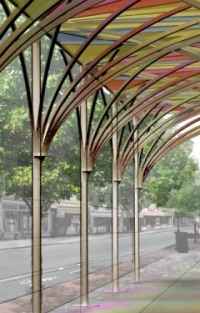 We
posted an announcement last August for the "urbanSHED International Design Competition," and Young-Hwan Choi, a 28-year-old graduate student from the University of Pennsylvania, heeded the call* and won the $10,000 cash prize. So how about showing L+L a little love, wontcha, Young? A little sumpthin' sumpthin'... anything? No?
We
posted an announcement last August for the "urbanSHED International Design Competition," and Young-Hwan Choi, a 28-year-old graduate student from the University of Pennsylvania, heeded the call* and won the $10,000 cash prize. So how about showing L+L a little love, wontcha, Young? A little sumpthin' sumpthin'... anything? No?
 A day on which one can't help but think of monuments and symbols seems like an appropriate time to take a look at a successful modern monument... at least
 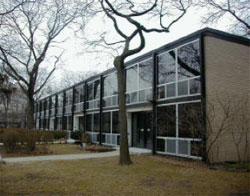 Modern urban redevelopment projects generally have a bad rap, with conclusions batted about of the failure of modernism to produce livable communities. Not all modernist developments met the same fate as Pruitt-Igoe, however. Shining examples of modernist planning are scattered around the world which deliver on the promise that modern visionaries hoped to fulfill.
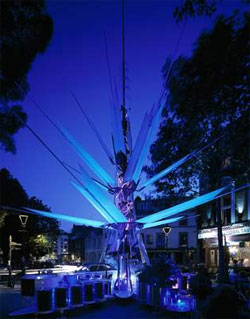 Nothing to do with the UK
 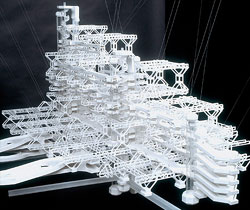 An exhibition at the Barbican Art Gallery in London running June 15, 2006 - September 17, 2006.
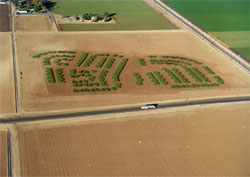 An exhibit at the Arizona State University Art Museum in Tempe, Arizona running September 9, 2006 - January 27, 2007.
 The exhibition Future Landscape shown at
  St. Patrick's Day seems an appropriate time to get back to my series on Ireland. Having looked at Dublin, both
  When the
  Veenu Jayaram was among the landscape architecture students I met when I sat on the jury for the
 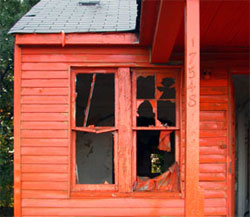 Detroit is one of the most spectacular examples of boom and bust in the United States - once opulent and then blighted - this capital of the Rust Belt is one of the nation's fastest shrinking cities and prime example of the phenomenon of "white flight" and, subsequently, sprawl. Large numbers of buildings and homes have been abandoned and many have been torn down or have fallen down and cleared away. Yet many vacant buildings remain in various states of decay.
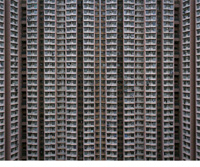 Michael Wolf is a photographer who captures the residential condition of Hong Kong as a portrait of both density and abandonment. The repetitive patterns of apartment buildings showcases order at its most extreme producing a visual lull that is both attractive and arresting. The majority of images were captured at unknown heights creating a boundlessness that is uncomfortable, but outweighed by the intrigue. Michael Wolf's truly engaging study can be found in Kenneth Baker and Douglas Young's Hong Kong: Front Door / Back Door.
 Getting back to Ireland
  A panel discussion with City Planning officials, architects, and developers will be held on Saturday, November 5, 2005 from 11am-3pm.
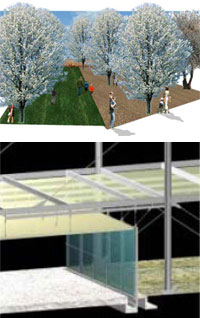 We first "met" Lorenza Casini, a student in the
  A 'city within a city' is a phrase used in Japan to describe a cluster of buildings connected by industry type, restaurants, recreational facilities and occasionally residences. Shiodome Shiosite is one of Tokyo's newest complexes consisting of skyscrapers that house media giants like Nippon Television and Dentsu Inc., one of the largest advertising agencies in Japan.
 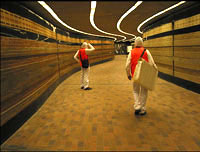 Need a reason to visit Montreal this winter? Montreal's underground city is a good enough one in my books. With its inception in 1966 the plan for the underground coincided with the opening of Montreal's Metro, and has since grown to include 1,500 offices and 1,600 boutiques. It also has numerous art installations, a skating rink, and leads you through historic and newly constructed buildings. For instance, you can go from IM Pei's Place Ville Marie to
 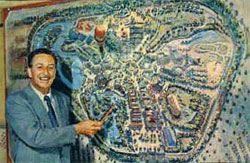 Disneyland is not regarded fondly by the architecture and design community at large with it's faux castles, jungles and streets and oversized rubber-headed rodents gallivanting about. But there is no denying the genius of the planning concepts and methods pioneered and honed by Walt Disney and his "Imagineers" and the impacts that their work has had not only on American and international cultures, but also on the design professions.
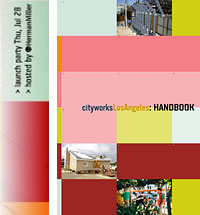 CITYWORKSLOSANGELES, a volunteer based forum of members from the architecture and design community acting as a catalyst for real world solutions in Los Angeles, is holding a book launch event on July 28th from 5 - 8 pm at the Herman Miller Los Angeles National Design Center.
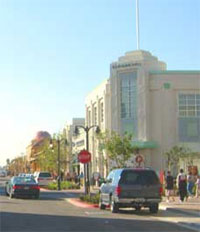 It has been a little while since we have visited this topic, but an article in Metropolis by Karrie Jacobs ties into some issues we have touched on here before... so nice of Karrie to help us weave some things together.
 Australian landscape architect Elizabeth Mossop has an interesting article currently at Topos about the state of the profession and the opportunities that landscape architects have to shape the world beyond the realm of "privileged landscapes" where their work has traditionally been focused.
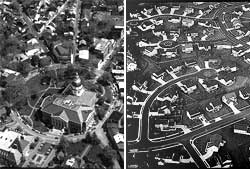 John Norquist, president of the Congress for the New Urbanism in Chicago, provides a rebuttal that is admittedly more studied and level headed than our
 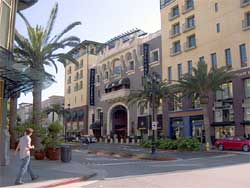 Andrew Blum has come to some concerns and conclusions similar to our own when it comes to the lifestyle center phenomenon. In an article published today on Slate, he talks about the evolution of malls and the appropriation of "public space."
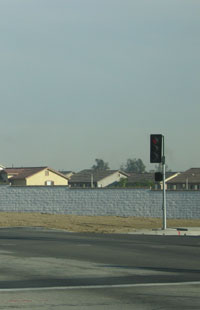 Sometimes it doesn't matter what opinion I may hold when I read gibberish spewed by someone feigning authority. Mind you, I am not a journalist (most traditional journalists would be quick to point out that journalistic shortcoming of blogs), but I am an educated professional with experience, opinions and knowledge that give me some background from which to judge the worthiness of an argument within my field. I have read the opinions of many educated opponents of New Urbanism that I can respect, but an article published Sunday in The Orange County Register written by
 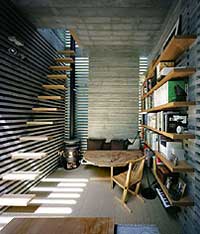 As a follow up to the quasi-debate going on with regard to our post about
 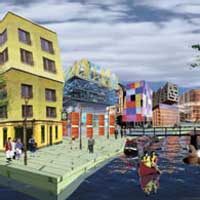 This project adjacent to Manchester’s city center aims to regenerate the former Cardroom housing estate, which itself was an urban renewal effort in the 1970's to reclaim an abandoned industrial sector. Poor planning contributed to the demise of Cardroom Estate, but a bold new framework by Alsop hopes to learn from the past while looking forward.
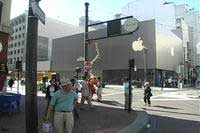 This is an interesting concept, a web-based directory where you can actually see the block where a business is located, and browse the surrounding neighborhood. You got to wonder if this will actually work (especially fiscally). But I really like the idea of being able to find what else is located in the surrounding neighborhood, and seeing it is pretty cool too.
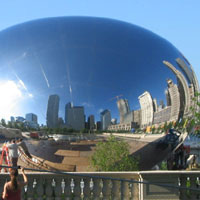 Related to our continuing concern with the privatization of public space, here is an interesting situation featuring Anish Kapoor's Cloud Gate sculpture in Chicago's Millennium Park.
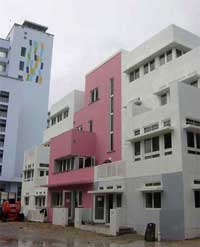 While I appreciate the concept of the tower in the park, the reality of many modernist urban developments can be quite dismal. And while I agree with the principles of the
 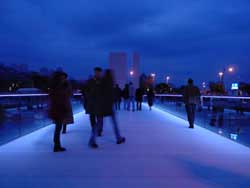 Exhibit at the National Building Museum in Washington, DC running January 15 through May 15, 2005.
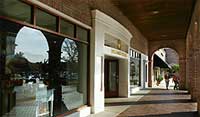 In twenty years they won't want you to say "lifestyle center." Anyway, more about the lifestyle center trend in the news.
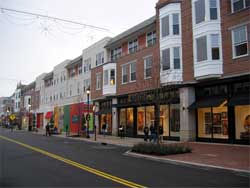 It's a mall. Another mall. It isn't even an old town center that has been revitalized and has mall-like characteristics. It's another mall themed as a town. And yes... it's another post about lifestyle centers. Sheesh, why don't we give it a rest already?!
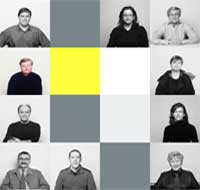 Exhibit at the Art Institute of Chicago running through April 15th, 2004.
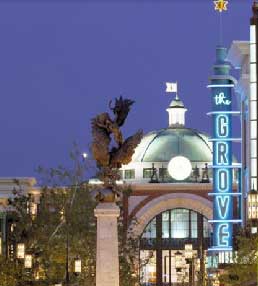 If it looks like a town and feels like a town, it isn't necessarily a town.
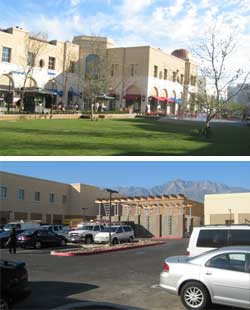 Victoria Gardens is not a ground breaking step in the evolution of malls. The idea borrows from New Urbanist concepts fused with the concepts or retail design explored by
 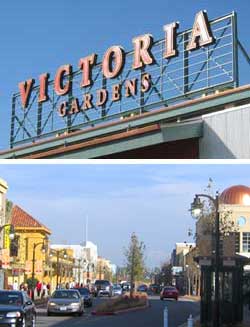 This former agricultural center 50 miles east of Los Angeles was once home to sprawling groves and vineyards, but has been more recently known for the sprawl of big-box mini-malls and cookie cutter tract homes. Now a new development seeks to be the downtown that Rancho Cucamonga, California has never had.
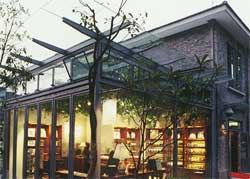 The upscale outdoor urban shopping complex can be found these days even in China, complete with Starbucks and Haagen-Dazs. The photos seem to show a very high quality project beyond many that we have seen in the United States. We are kind of fascinated by this project as it seems to do a pretty nice job of combining historic architecture and landscape with modern additions, but even more so because one of the restored houses in the project was the site of the first Communist Party meeting in China... hello irony.
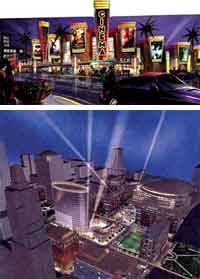 What is the deal with these new entertainment districts such as L.A. Live by Anschutz Entertainment Group and Kansas City Live by the Cordish Company? These are just two examples of the new mega downtown developments which are popular these days, and apparently the word "Live" is the new buzz word... some past hot words (just off the top of my head): Marketplace, Promenade, street addresses like One Rodeo, um... let's see... oh yeah, and remember old skool words like Plaza and Mall?
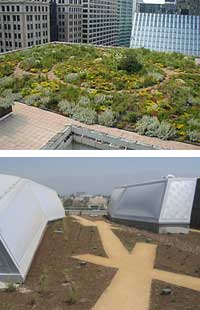 There has been a lot of talk recently about planted roofscapes. We have featured a few projects recently that have employed green roofs, and just today we have run across two news articles: one features a Toronto resident has created a roof garden on top of his garage, and the other a commercial building in Washington D.C. And of course there is the Ford Motor Company factory complex which has been renovated with a 10 acre planted roofscape.
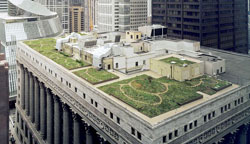 Lisa Chamberlain at Metropolis writes:
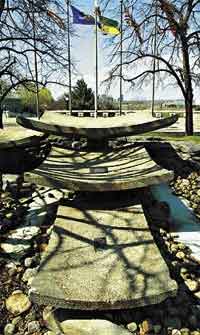 "Created in the 1960s, this often overlooked urban gem is still a work of artistry and breathtaking vistas."
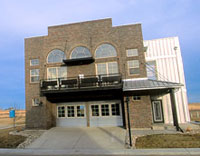 "A fascinating piece in Metropolis about The Ironwork Lofts, a rather dismal collection of executive homes in Colorado masquerading as pseudo factories, canneries and warehouses. The architects responsible are Terra Verde, who are seemingly able to turn their hand to anything, from the style that should be known as Prairie Golf, through to Neo Adobe and Steroidal Ranch. The developers, Cornerstone Homes ('we build livable art'), have identified a niche - people who want the space and style of city living without the actual city."