Please help if you can. Thank you!



 The United States Postal Service is giving Charles and Ray Eames (and some of their designs) some face time on your mail.
 An article by Marty Nemko in U.S.News & World Report lays out a list of the "most–and least–rewarding careers" for 2006 in four categories: excellent, good, fair and poor. Architecture lands in the "fair" category, while landscape architecture is placed as an "excellent" career choice.
Many outsiders think this is a terrific, artistic career, but they don't realize how long it takes before an architect gets to design a building.Landscape Architecture:
Because most landscape architecture projects don't have as many components as the design for a building, young landscape architects may get to design entire projects. Also, the training is shorter.Read. Digest. Vent.
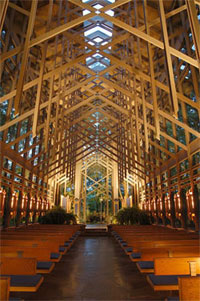 It is one thing to celebrate a new building, but it is another to look back and recognize an outstanding design that has stood the test of time. We have an award winner looking back 5 years to show you from Ireland as well, but here is a building in the US which has been awarded a 25 year award. And I am sure that the Throncrown Chapel will continue to be celebrated for some time to come.
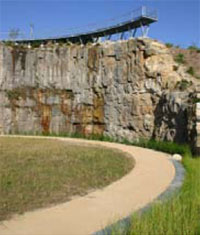 The Former BP Site Public Parkland at North Sydney (which we featured last May) was recently awarded the 'Overall Award for Excellence' by the Australian Institute of Landscape Architects New South Wales Chapter. It also won the 'Design Excellence Award' for best project in NSW, bringing the total medal count for this project to four. The project design is in the vain of the current Spanish "enviro cool" parks.
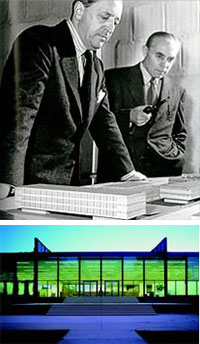 Earlier this week we featured a Clipping regarding the reopening of IIT’s Crown Hall set for this weekend. With the most recent news of the campus's historic designation, we'll take a larger look at the IIT campus.
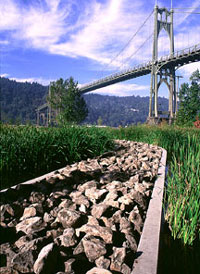
The positioning of stone in the landscape is an ancient and sacred tradition and has always interested me - from the stone walls and megaliths in Europe - to stone gardens in Japan.We would like to pay tribute to the life of distinguished landscape architect Robert Murase who passed away suddenly this week. An article by Randy Gragg in The Oregonian chronicles Mr. Murase's life and career.
• Robert Murase
Article: The Oregonian - Robert Murase dies at age 66
Firm: Murase Associates, Inc.
Via: The Dirt [Thank you, Dave]
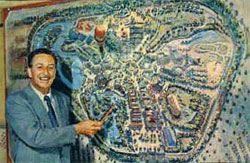 Disneyland is not regarded fondly by the architecture and design community at large with it's faux castles, jungles and streets and oversized rubber-headed rodents gallivanting about. But there is no denying the genius of the planning concepts and methods pioneered and honed by Walt Disney and his "Imagineers" and the impacts that their work has had not only on American and international cultures, but also on the design professions.
At Disneyland, designers created the first physical space conceptualized as an interactive experience using cinemagraphic story telling devices to choreograph the free movements of visitors through a three dimensional fantasy movie. Sequences of spaces and transitions were carefully planned to combine disparate elements into a cohesive whole.
An article in the LA Times talks a bit about the influence of the park on everyday places such as malls and revived downtowns, "lifestyle centers" and other places where the distinction between fantasy and reality has been blurred beyond the gated and bermed Magic Kingdom.
Article: LA Times - A Park With a Powerful Spell
Link: Wikipedia - Disneyland
Link: Disney corporate history - Disneyland
Link: Disneyland Beginnings
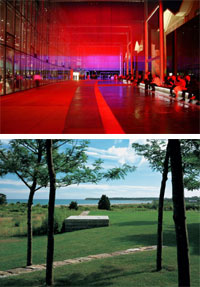 Thirty-three projects were seleced to receive awards from a field of over 520 entries.
"This year’s awards projects demonstrated the rising cultural relevance of responsible planning and good design across a range of scales and project types in the United States and abroad," said Gary Hilderbrand, FASLA, jury chair and principal at Reed Hilderbrand Associates Inc. "By bringing forward a compelling set of diverse projects, this jury showcased some of the successes landscape architects are having with the complex issues that arise for thoughtful design practices today, including the drive for clarity, expressiveness, rigor, and durability in design."
Link: ASLA 2005 Professional Awards
 We occasionally show our southern California bias... but I am not sure why the New York Times shows theirs so often.
The New York Times published an article yesterday profiling proponents of "native" plants in California, focusing on Rene Russo's crusade to promote native species... an interest we share and which we subtly display with our side bar Dudlea image. In my experience, newspapers are infamously inept in their coverage of nature and landscape, and while this article is interesting and worth reading, I find the poor reporting to be annoying. For example:
Native plants like senecio and aloe, which fill the yard in front of Andree Matton's house in Monrovia, Calif., thrive on less water than grass.Senecio and aloe are not native even to this continent, let alone to Monrovia, California.
Article: NY Times - Flora With a Star in Its Corner
Reference: Garden/garden (L+L)
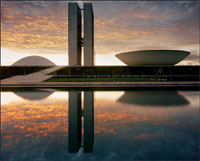 Funny how sometimes you are just not ready to seem something until you are in the right mindset. Way back in May, the New York Times Magazine published their Architecture 2005 issue which included a lengthy piece by Michael Kimmelman profiling the life and career of Brazilian modern master Oscar Niemeyer.
Our fascination this past weekend with images from Brazil has put us in the frame of mind to digest this retrospective, and we highly recommend it to you.
Article: NY Times Magazine - The Last of the Moderns
Link: Slideshow
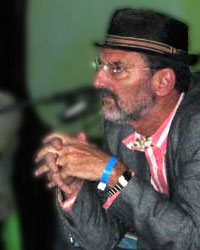 Architecture's bad-boy-cum-shining-star has garnered quite a bit of attention recently... something to do with winning the Pritzker Prize perhaps?
I.D. online features an interview with architect Thom Mayne of Morphosis.
A cult figure for 30 years, architect Thom Mayne says he’s surprised now to find himself in the mainstream.Check it out.
Article: I.D. online - Q + A - Thom Mayne
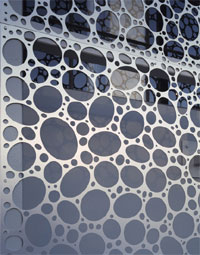 An article in today's San Diego Union-Tribune covers the 2005 San Diego AIA Awards program and quotes LA architect Lawrence Scarpa saying:
"I've served on a lot of (design awards) juries. I was shocked and pleasantly surprised to find this many quality projects.
"There's something going on in San Diego that's right."In addition to Lawrence Scarpa, the jurors were Michael Folonis of Michael W. Folonis, AIA and Associates and Ralph Johnson, FAIA, firm-wide design principal at Perkins+Will.
Article: SD Union-Tribune - There's something going on
Link: AIA San Diego Design Awards
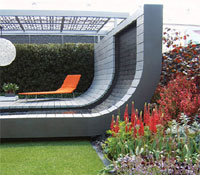 The famous annual garden show at Chelsea is now open, and the garden design winners have been announced. Here are a few of our favorites from the winners list.
Link: Chelsea 2005 awards
Link: Chelsea Flower Show 2005
Link: BBC Coverage of the Chelsea Flower Show
Reference: Chelsea 2005 (Land+Living)
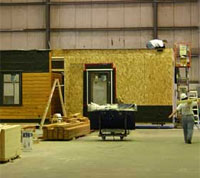 Michelle Kaufmann's modular "Sunset Breezhouse" was revealed this weekend to crowds at Sunset Magazine's annual Celebration Weekend in Menlo Park, California.
Sunset offers quite a few images of the house in the factory, in transit and on site, though you have to be a registered subscriber to view everything.
An article by John King on SF Gate provides some commentary.
Article: Sunset - The Sunset Breezehouse
Article: SF Gate - A model house for the modern age
Link: Sunset Breezehouse, Michelle Kaufmann Designs
Reference: Breezehouse (Land+Living)
Thom Mayne hasn't been sleeping well. The radical L.A. architect, whose edgy designs seem to mirror his notoriously intense personality, keeps waking up from anxiety dreams. "They're all connected to figures of authority," he says. We don't need Freud to figure this one out. Mayne, 61, a true child of the '60s, has spent most of his career as a rebel outside the architectural mainstream—teaching, entering design competitions, creating dense, hyperkinetic small projects and basically staying faithful to his own gestalt.Article: MSNBC/Newsweek
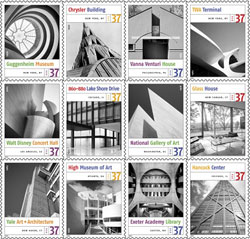 A set of 12 postage stamps featuring American Architectural masterworks was unveiled today at the AIA National Convention in Las Vegas. The stamps will be available to the public May 20th.
Featured are:
Link: USPS
Link: USPS press release
I had a client come to me in April with a vague idea of how they wanted to remodel their home... and they wanted to break ground by the end of May! Uh... yeah. Most people have no concept of what it takes to design a building.
Design takes time; architect Arrol Gellner wrote an article published yesterday in the San Francisco Chronicle explaining the process of design. But he doesn't even begin to talk about dealing with government agencies to gain approvals and permits or the actual construction process.
Article: SF Gate - Rome (or your bathroom) wasn't designed in a day
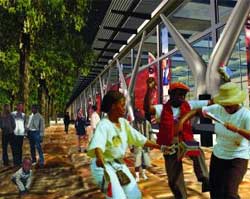 Australian landscape architect Elizabeth Mossop has an interesting article currently at Topos about the state of the profession and the opportunities that landscape architects have to shape the world beyond the realm of "privileged landscapes" where their work has traditionally been focused.
The key to future directions in landscape architecture is to broaden our ideas of landscape practice. Future practice must encompass all types of landscapes and all landscape problems. Landscape issues must become an intrinsic part of all developments; therefore, landscape practice must become "affordable."Link: Topos Issue: 2005/50 - Affordable landscapes
This question comes up all the time for me: when I design houses for clients, and lately my wife and I have been thinking about just exactly how we want to live as we consider purchasing the property where we live that is zoned multi-family. How much of the lot should we use for ourselves versus for rental units? How much space should we allocate to specific uses, and how can we use spaces for multiple uses? How efficient can our home be while still providing needed personal space? Less is more, but it is more work to figure out how to do less! But I digress...
We've touched on the issue of home size here at Land+Living many times before, and an article in today's Los Angeles Times takes a look at the question of home size. The article includes an interview with Sasha Tarnopolsky & John Jennings of Los Angeles based architecture and landscape design firm DRY Design.
Article: LA Times - What makes a home the right size for you?
Reference: Size Matters (Land+Living)
Reference: The Very Small Home (Land+Living)
The American Dream just keeps growing. Since 1970 the size of the average new home has ballooned by 50 percent.Studies have found that even with the big houses, modern comforts, opportunities and latest technologies, we are no happier than our predecessors. In fact, some studies show that Americans are less happy today than 25 years ago. It's part of what is often referred to as "the dark side of the American dream," the insatiable appetite for more wealth and more stuff to the detriment of personal well being.
Whoa... too big a topic for this quick blog... but while we here at Land+Living are all for the enjoyment of your home and the contents within and without, we also believe that there is more to life. Dare we say, it’s not the size that matters, it’s how you use it.
Link: Mother Jones - This New House
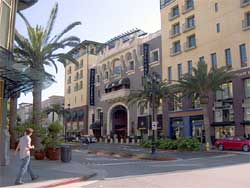 Andrew Blum has come to some concerns and conclusions similar to our own when it comes to the lifestyle center phenomenon. In an article published today on Slate, he talks about the evolution of malls and the appropriation of "public space."
The lifestyle center is a bizarre outgrowth of the suburban mentality: People want public space, even if making that space private is the only way to get it.Article: Slate - The Mall Goes Undercover
Unfortunately, this fits with my informal assessment of friends and colleagues who are architects here in the United States... so, be nice to your designers, won't you?
Link: City & Guilds
Via: The Dirt
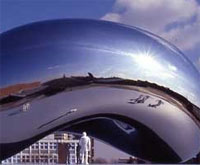 A recent article in the Christian Science Monitor details the controversy surrounding the photographing of public art, namely the Cloud Gate sculpture by Anish Kapoor in Chicago's Millennium Park.
Can a city really prevent others from photographing - and profiting from - public art on display in a public park?Link: csmonitor.com - "Who owns public art?"Under copyright law it can, explains American University professor Christine Farley.
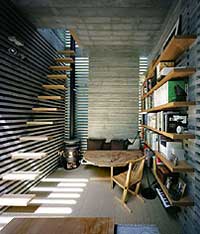 As a follow up to the quasi-debate going on with regard to our post about The Very Small Home, here is an article that talks further with author Azby Brown about building smart in Japan... and elsewhere.
At Land+Living, we're all about functional space. Americans as a generalization may think that bigger is better... however we think that functional is better. Perhaps square footage is not so important as "well designed" usable space. Urban property values continue to spiral upwards (like for us in Los Angeles) forcing us to truly consider how we live and what we value.
(Azby Brown) suggests that the small house is actually superior to its larger incarnations and that, given a choice, the truly discerning are opting for life on the squeeze.Read.
Article: Telegraph - Turning Japanese, why aren't we turning Japanese?
Via: Archinect
Reference: The Very Small Home (Land+Living)
 An article in the New York Times talks about the legacy of Frederick Law Olmsted and the Groundswell exhibit which opens tomorrow at MoMA in New York. The article focuses on the designers and projects that will be featured in the exhibition including Peter Latz, Adriaan Geuze, Catherine Mosbach and the much anticipated Fresh Kills project on Staten Island by Field Operations.
No longer the handmaidens of architects, landscape architects are building huge parks, some on a 19th-century scale, on polluted industrial spaces...Article: NY Times - From Ruin and Artifice, Landscapes Reborn
 People get really crazy about Ikea... way too crazy... tragically crazy in this case. Reading about this incident near London reminded me of an Ikea experience of my own, though not nearly so disastrous.
Several years ago my wife and I drove 3 hours to get to, what was then, our closest Ikea store in Emeryville, California. The store had just been opened for a couple of weeks, and was the first store in Northern California. Upon our arrival just after store opening at 10:00 a.m., we were greeted by a full parking lot and a mass of people flooding into the store - apparently crowds would wait outside the store more than an hour before opening each day.
Everywhere inside there were people pushing through crowds and franticly wading through merchandise as if it were a contest. And there were lines... long lines: to place our order; at the concession stand; at the register; and at the service warehouse desk waiting for our purchase to come out. We had just a few items on our list that day and had planned to spend some time in the city after we were done… but it didn’t happen.
Five hours later, we emerged from the store… tired, hungry and beaten by the experience. We loaded the car and started the long drive home.
And at the end of all that, we had come to a conclusion: no, it was not worth all of the hassle. But what other choice did we have to get reasonably well designed items that we could afford?
Press release: Ikea - An incident at the opening of IKEA Edmonton
Article: BBC - Crush chaos at Ikea store opening
Image from Waxy
Land+Living gets a quick mention in an article by Lockhart Steele about design blogs in the New York Times Home & Garden section. And it has already gone to our heads. So, what are you waiting for? Go read it already!
EDIT - Oh, and we should mention, while the article implies that our focus is landscape design, you can see that we cover a wide range of topics. That said, we are dedicated to covering landscape design, objects and ideas.
Article: NY Times - Hot Off the Web: Gossip and Guidance (alternate link)
 In twenty years they won't want you to say "lifestyle center." Anyway, more about the lifestyle center trend in the news.
The number of lifestyle centers has quickly accelerated, from just 30 in 2002 to 120 at the end of 2004. Between 10 to 20 new centers are slated to open each year for the next two years. By contrast, only eight new regional malls are expected to open by 2006, according to ICSC.Link: CNNmoney - Not a mall, it's a lifestyle center
 A paper by Peter Gordon of the University of Southern California takes an interesting look at sustainable planning and policy and suggests that long term sustainability may be hampered by some current "solutions."
Perhaps a bit academic for L+L? Nah... it pays to be informed. Take a break from the eye candy and read up.
Link: Sustainability Planning: First, Do No Harm (500k PDF file)
Link: USC Urban Initiative
Via: Planetizen
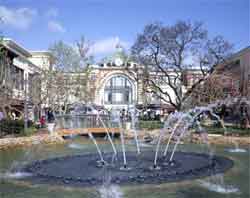 A critical look at the "lifestyle center" phenomenon and the Los Angeles area developments of Rick Caruso.
...city officials, generally speaking, are not visionaries. Although their most important role is to safeguard history and nourish a distinct sense of place, they're like heroin addicts when it comes to retail.Article: LA Times - Lunching With the Caruso of RetailThey'll bulldoze the past, raffle off the last precious parcel of open space and build parking garages over their mothers' graves for a quick hit of sales tax revenue.
While McDonough is not reflexively anti-regulation, a key Cradle to Cradle tenet is that regulation itself is evidence of design failure. In other words, if you can build a factory that emits nothing harmful, there's no need for heavy regulation.A good chunk of today's environmental law, McDonough argues, doesn't aim for this ideal. Instead, he says, it sets out to make something less bad--reducing pollution and so on--rather than encouraging a fundamental redesign to turn the bad thing into something good.
Article: Forbes - Cradle To Cradle To Washington
Reference: Cradle to Cradle (Land+Living)
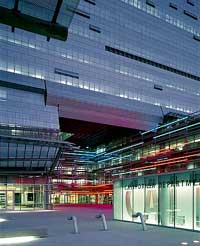 In a review of the new Caltrans District 7 Headquarters building in downtown Los Angeles, Nicolai Ouroussoff touches on some ideas that are pertinent to our earlier posting about "lifestyle centers" and the privatization of public spaces. The building is an important new modern design and the article is worth the read (and browse through the slide show) even if you are not interested in our little diatribe about retail developments.
Like most American cities... [Los Angeles] has had to cope with increasing pressures from developers and urban planners, who tend to see urban space as nothing more than a vast machine for middle-class consumers. In this context Mr. Mayne's revamped Modernism has a refreshing honesty.
Article: NY Times - A Building as a Beacon for a City's Plans
Firm: Morphosis
Reference: Reality Bites (Land+Living)
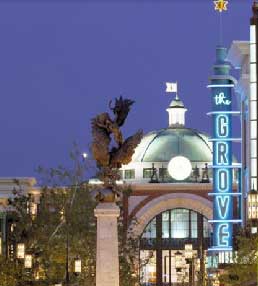 If it looks like a town and feels like a town, it isn't necessarily a town.
Today's breed of mall, dubbed, "lifestyle centers," may want to serve as surrogate town centers, but strip away the facades, the faux layers of history and the rhetoric, and they are private malls. Just ask the guy in Texas who tried to circulate a petition at one of these "town centers".... errr, malls. The developers may love the fact that their malls somehow fulfill the function of a downtown, but only so far as consumption is concerned. Make no mistake, the open space amenities of these centers are only masquerading as public space. The sidewalk is private, the "town square" is private. Free speech does not necessarily have the right to occupy this realm. No longer is fantasy contained within the box of the television set, or in the theatre, or behind the ticket booth at the theme park.
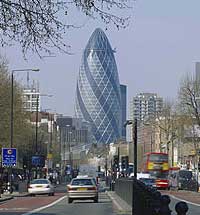 An article in the Economist talks about the use design and technology to reduce environmental impact, cut costs and provide better places to work. Cited projects include the "Gherkin" in London by Foster and Partners, the Condé Nast Building in New York by Fox & Fowle Architects, and the new World Trade Center Freedom Tower by SOM's David Childs with Studio Daniel Libeskind.
Article: The Economist - The rise of the green building
...Green design is the real post-modern movement: because it is the first movement after modernism that has something new to say and yet is still a kind of modernism, a fulfillment of some of modernism's central goals: functionalism and future-fetishism.Check it out.
Link: WorldChanging - Why Green is the Real Postmodernism
Via: Archinect
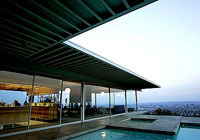 From the article:
"[Case Study House No. 22 is] an architectural masterpiece perched at the top of the Sunset Strip, looking out at a blanket of lights," explains location manager John Panzarella, who used the Stahl home for the home of soap opera doctor Greg Kinnear in "Nurse Betty." "The house is completely made of glass, so you have the opportunity to film the interior from the exterior. You can set up a shot with the pool in the foreground, and through the glass wall you can see right into the house."Link: LA Times (Registration Req'd)
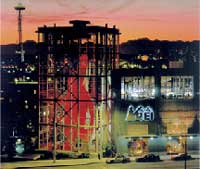 "BetterBricks talked with Bert Gregory, President & CEO of Mithun, a Seattle-based architecture, design and planning firm and a national leader in resource sensitive and sustainable design."
"Mithun is probably best known for its design of the REI stores and IslandWood, the innovative environmental learning center on Bainbridge Island, Washington. Bert served as design team leader for both of those projects."
Link: BetterBricks
Firm: Mithun
Got a green thumb? Gardens are for amateurs; consider applying your talents with plants to your roof. A movement with, uh, roots in Germany is picking up steam in the United States that aims to ameliorate ecological problems from storm water runoff to urban greenhouse warming. A "green roof" or "ecoroof" replaces traditional roofing with a lightweight, living system of soil, compost and vegetation. It's not about looking pretty (although it does) but rather creating a thin, green skin atop your building that gives a little something back to the world—and your pocket book. Apart from local environmental benefits, preliminary evidence suggests green roofs reduce roof maintenance costs and energy use by insulating buildings from extreme temperatures.
Link: MSNBC
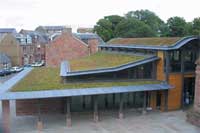 "Green roofs are a new fashion in nature conservation, promoted enthusiastically by the wildlife campaigner Dusty Gedge, of Livingroofs.org."
"With an estimated 24,000 hectares of roof space in London alone - an area 28 times the size of Richmond Park - the potential of green roofs is clear. As brownfield sites are developed, the only direction left for wildlife in many areas is up"
Article: Independent Digital (UK) - Room at the top
Link: Livingroofs.org
Reference:
Roofscapes (Land+Living)
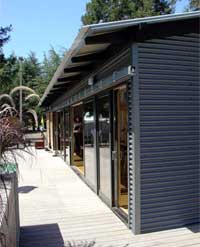 Yesterday's MD 100 sighting was just a taste... today we have the fix for you prefab junkies.
ArchNewsNow features an interview with Michelle Kaufmann, creator of the Glidehouse.
Link: ArchNewsNow - Interview: Michelle Kaufmann and Glidehouse: Chic and Green
Next, an article in the October issue of Time Magazine talks about prefab including Michelle Kaufmann (again), Adam Kalkin and kit homes by Michael Graves and James Cutler for Lindal Cedar Homes.
Link: Time - Prefab Rehab
And finally your prefab buzz kill... an opinion piece in the Opinion Journal takes a stab at the Dwell Home.
Link: Opinion Journal - The Wieler-Tung Home: Modernist, modular, but not yet mass produced
The answer may not be as surprising as this fact quoted in the article: New York City has 5 million trees.
The Midwest was the heart of America's prefab-housing industry during the first half of the 20th century. Aladdin Homes of Bay City, Mich., is usually credited with pioneering mail-order sales of pre-cut, relatively easy-to-assemble kit houses through its catalog, another innovation. Popular models included the Pomona, an Arts and Crafts bungalow that would have looked at home on any of the tree-lined streets of that Southern California city.Link: Article (latimes.com)
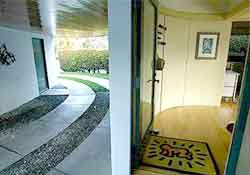 An article by Janet Eastman in the Los Angeles Times covers the homes of lesser known California modernist architect, Harwell Harris.
Harris, who designed houses in Southern California in the 1930s through 1950s, merged elements of Greene & Greene's Arts and Crafts style such as wood, bold roof overhangs and Japanese influences with Modernism's lean lines and liberal use of glass. His small houses showcase walls of windows and see-through doors in every room.Link: LA Times (with images)
"California officials are proposing that half of all new homes in the state be running on solar energy in 10 years, an effort spurred by $100 million in annual incentives paid for by electricity consumers.Link: MSNBCThe move comes three years after the state suffered through an energy crisis that left utility customers paying off billions in debts incurred when wholesales electricity rates hit record-high levels.
The plan proposes that the state give rebates to home builders who install solar panels on new homes, and incentives for installing panels on existing homes, according to a California Environmental Protection Agency draft unveiled this month."
Link: BuildingGreen.com
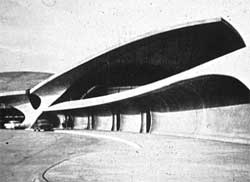 Speaking of things Saarinen, the Design Observer has posted an article about Eero Saarinen's TWA Terminal with a bit of history of the building along with links to photos, facts, etc. Also today, a New York Times article outlines plans for Jet Blue to use the currently shuttered facility.
Link: Design Observer
Link: New York Times
More contemporary photos at: Galinsky
"At dinner every night, we had discussions about art or design in some form," she says. "It was a very rich environment in terms of art and design. I didn't know until much, much later how much I picked up by osmosis."After a series of career and life changes, Susan now runs a small landscape architecture practice in Golden, Colorado.
Link: Rocky Mountain News - Artist, designer by nature
Firm: Saarinen Landscape Architecture
 An an interview with Michael Graves by Linda Tishler in Fast Company about his partnership with Target to create an affordable line of designer products. The arrangement with Graves paved the way for Target's future collaborations with other designers and making Target the budget outlet for designer products.
Article: Fast Company
Link: Graves at Target
 The lawn is a deeply rooted "need" in the minds of most Americans, but we have been advocates of "less lawn" for some time. There are lawns that are useful (for playing sports, for pets, for kids) and then there is the landscape filler; broad emerald green swaths of land dedicated to nothing but grass for the sake of grass... because it would be (somehow) weird not to have a lawn. An article in the Journal News takes a look at the lawn and some slowly changing attitudes.
"Scientists say these lawns come at considerable environmental cost, and for at least a decade there have been efforts to rein them in."
Link: The Journal News
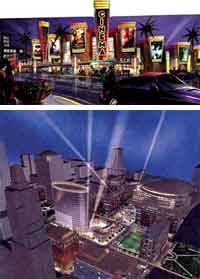 What is the deal with these new entertainment districts such as L.A. Live by Anschutz Entertainment Group and Kansas City Live by the Cordish Company? These are just two examples of the new mega downtown developments which are popular these days, and apparently the word "Live" is the new buzz word... some past hot words (just off the top of my head): Marketplace, Promenade, street addresses like One Rodeo, um... let's see... oh yeah, and remember old skool words like Plaza and Mall?
These two projects by different developers (although Anschutz is building the arena in Kansas City) but share some other similarities beyond the name. Both are centered around the city convention center, include a sports arena, and will include retail, residential, office and entertainment. The mixed use nature is key to this kind of project, thanks in part to the New Urbanism. We're all in favor of mixed use, however these types of developments tend lack the very thing that they are attempting to recreate, that is the organic, multi-scale nature of urban centers; instead they are singular, mega-malls with little or no room for progressive intervention or evolution. Past mega efforts in major cities have become sore spots, such as the late 70's Les Halles in Paris which is now the site of high profile effort to mend the damage. But, perhaps these Live projects will at least be fun for a while.
Link: Kansas City InfoZine
Link: Los Angeles Downtown News
Reference: Ephemeral cities (L+L)
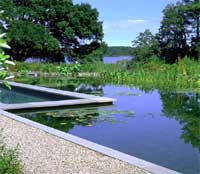
The American Society of Landscape Architects (ASLA) has announced the recipients of its 2004 Professional Awards. The awards will be presented during the ASLA Annual Meeting, October 29-November 2, in Salt Lake City.Some nice browsing... lots of images and links.
Link: ASLA 2004 Professional Awards
Reference: ASLA 2004 honorees announced
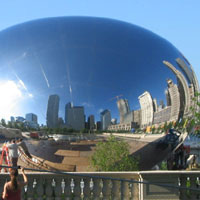 Weblog "A Daily Dose of Architecture" is showing two images of the reflective Cloud Gate sculpture in Chicago's Millennium which has been uncovered in preparation for the park's grand opening festivities... check it out.
Link: A Daily Dose of Architecture
Reference: Chicago's Millennium Park
 Article by Linda Baker over at Salon.com that discusses the relevence of green building techniques on super-sized homes:
"Here's what the green residential landscape looks like in the 21st century. In the United States, advances in green-building technologies have to compete with the proliferation of 3,000-square-foot-plus homes -- simultaneous trends that underscore one of the key paradoxes of sustainable development in the United States.Continue reading at Salon.com (get the free day pass to read)"In spite of everything we've done to make the building envelope more efficient," O'Brien said, "we're still using more energy in our homes." Nadav Malin, the editor of the monthly newsletter Environmental Building News, agrees. Most of the green features people are incorporating into their homes represent ecological improvements in the 10 to 50 percent range, he said via e-mail. But even a 50 percent reduction in the ecological footprint, Malin noted, "would be totally offset by a doubling of the house size."
Link: Salon.com (Registration Req'd)
What we are seeing is more like a subtle shift in the role of cities: from the commanding centers of global civilization to (at least in the advanced countries) a more peripheral function. In many ways, this follows the prediction made a century ago by H.G. Wells, who said that cities would evolve from the unquestioned center of economic life into a "bazaar, a great gallery of shops and places of concourse and rendezvous."Link: Trying to be hip won't save cities
 From this weekend's Fourth of July cornerstone laying ceremony for the new World Trade Center Freedom Tower in New York, a panorama by Jook Leung shows the scene from ground zero. The tower was designed by David Childs of Skidmore, Owings & Merrill based on Daniel Libeskind's master plan.
Link: Rebirth Marked by Cornerstone at Ground Zero
Link: Port Authority Press Release
And earlier today, the Princess of Wales Memorial Fountain designed by Kathryn Gustafson and Neil Porter was dedicated in London.
Link: In pictures: Diana memorial
Link: MSNBC video feature
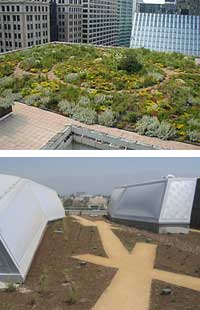 There has been a lot of talk recently about planted roofscapes. We have featured a few projects recently that have employed green roofs, and just today we have run across two news articles: one features a Toronto resident has created a roof garden on top of his garage, and the other a commercial building in Washington D.C. And of course there is the Ford Motor Company factory complex which has been renovated with a 10 acre planted roofscape.
There are multiple benefits to green roofs from this insulation value for the building to larger environmental issues such as the urban "heat island" effect, not to mention the design possibilities.
So for your browsing pleasure, here is a compilation of some links that we have found regarding green roofs... enjoy:
Article: Globe and Mail
Article: Washington Post
Article: MSNBC (Ford Factory)
Link: Ford's River Rouge Factory
Link: Roofmeadow
Link: Hyedrotech
Link: Green Roof Plants
Link: Creating a green roof (Interesting to read... dare to do-it-yourself?)
Reference:
Green Crusade
Reference: The Wind Tunnel
Reference:
Greenwich Academy Upper School/ Library building
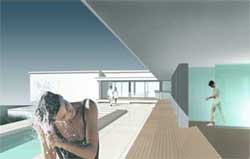 The first group of houses is under construction and "Sagaponac House-43" by Hariri & Hariri has just been completed.
The Houses at Sagaponac is a residential development in the Hamptons on Long Island, New York. It is a sort of who's who gallery of starchitects all building in the same neighborhood. The idea is to create something in contrast to the recent proliferation of shingle style "McMansions" inspired by another starchitect with a more historicist bent, Robert A. M. Stern.
The houses themselves are all designed to create modest, functional, single-family living spaces from 2,000 to 4,500 square feet that are environmentally conscious without compromising artistic vision.Apparently $1.4 - 2.9 million for a house is modest in the Hamptons... anyway, there are some cool designs to be built and we applaud the landscape plan for the development which emphasizes indigenous vegetation and eschews planting of vast ornamental lawns.
Via: Architectural Record
Link: Houses at Sagaponac
Firm: Hariri and Hariri Architecture
"When you work in a field for a long time, it can seem that the same things happen, day after day. But occasionally, it's a good idea to sit back and take a look at what has been going on. A couple of rainy days recently gave me some time to look over the topics of my roughly 400 columns and identify some new threads in the landscape fabric. For instance, I noticed an increasing desire in recent years for "natural" solutions to landscape opportunities and problems. Here is more on that topic and other topics of increasing current interest."
Link: Washington Post
Art Center's new South Campus in Pasadena transforms a site of industrial desolation into a metaphor for our times.
The design proves that desolation and decay can be virtues. A subtle balance of grit and elegance, the building draws on the wonderful moodiness of its setting. Old forms are carved up with surgical precision; new forms are imbued with palpable energy. The result is a building that is both emotionally raw and marvelously unpretentious.
Link: LA Times Calendar Live (registration required)
Reference: The Wind Tunnel
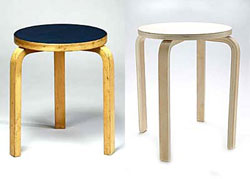 David Keeps at the LA Times writes about knockoffs in the design world.
"Imitation may be the sincerest form of flattery, but when it comes to design, it can also be the most insulting form of commerce.Take the classic Ball Clock created by George Nelson, a master of midcentury industrial design. A simple configuration of metal rods and painted wood, the 1948 timepiece, then priced less than $25, was an icon of peacetime that transformed the structure of an atom into a whimsical decoration. On Sunday, Los Angeles Modern Auctions sold a vintage Ball Clock for $1,300. As the hammer fell on the final bid, Ben Storck of Modern One asked: "Don't people ever tire of that clock?
Apparently not. The Ball Clock is one of the most recognizable — and most copied — products of the fabulous '50s."
Link: LA Times
Reference: Ikea and DWR
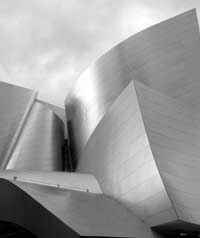 An LA Weekly article by Gloria Ohland entitled "Brave New Cityscape" makes an urban critique of icon buildings and their designers.
This is "starchitecture" that pushes the aesthetic frontier but also evidences the self-indulgence that can result from the cult of celebrity and genius. And there’s a strain of machismo running through these trophy buildings, as cocky and detached as they are from the surrounding neighborhoods.
While starchitecture has certainly given L.A. an edge, it’s those who look back as well as forward who will show us the way to a brave new world.
Article: LA Weekly
 Back in March, again in April, and upcoming in June, the EPA, the IDSA Design Foundation, and J. Ottman Consulting sponsored workshops for changing perceptions of sustainable design. An excerpt from the article:
"More than just evaluating products, the mission of the workshop is to demonstrate how producing green can be a win-win strategy, increasing a company's profits while positively distinguishing it from the competition. Ottman and Doering offered some simple "swift approaches" to environmental design: Use recycled materials; increase energy efficiency and substitute alternative energy when possible; reduce toxicity by using "known" and stable compounds; extend product life, moving away from disposable products by creating goods that are durable, upgradeable, and repairable; and provide the product as a service or on a lease basis where the consumer keeps the product through its useful life, and the manufacturer reclaims it for disassembly or refurbishment."Link: ID Online
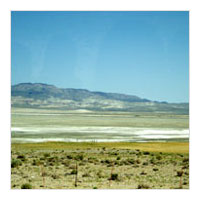 While this might not really fall under the guise of Modern Lifestyle & Design, this is actually an issue that we've followed over the years and if you're an LA resident, an issue that has had an enormous impact on modern LA society. As noted on our about page, we're avid snow sports enthusiasts and during our pursuits for Sierra Nevada snow, we pass by Owens Lake several times each month. It's nice to read about the efforts the LA DWP is making to restore Owens Lake in a publication such as Metropolis.
"Today, parts of Owens Lake look like a sandy desert floor, parts are under a few inches of water tinted red from algae, and still other parts are covered with a thick salt crust. The lake is the largest stationary source of pollution in America; its amount of wind-blown dust violates EPA standards of particulate matter 20-30 times a year. The EPA’s standard is 150 micrograms per cubic meter; levels measured at the lakeshore reach 12,000.Link: MetropolisNow the DWP is trying to reverse the damage it did to Owens Lake. The Department has tapped into the aqueduct to re-direct up to a quarter of the flow back into the lakebed, and is using a combination of shallow flooding and managed vegetation to bring the water body within EPA standards. The project is scheduled to end in 2006 with 29.8 square miles treated.
 The design submitted by Friedrich St.Florian, an architect based in Providence, R.I., was selected from a group of six semi-finalists in an open, national competition.
Pictures: National WWII Memorial website
Link: New York Times article
Link: Syndey Morning Herald
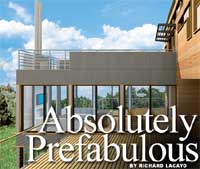 Time Magazine's Style & Design issue asks the question, "How retro can you go?" They present several articles touching on America's current fascination with mid-century design, prefab homes, and Ingvar Kamprad.
Fifties style is stalking the runways, and mid-century design is making its way into every room of the house. A look at the allure of America's favorite eraAbsolutely Prefabulous
Say the words prefab housing and most people think of snap together bungalows and log cabin kits. But a new generation of architects is making prefab more fun.Ingvar Kamprad
With one little wrench, Ingvar Kamprad gave the world access to great design.
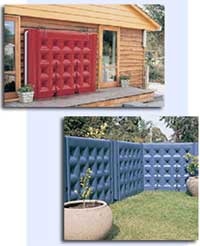 "The Waterwall modular system is a rainwater storage solution for urban households. A slim line tank design, each unit is only 330 mm deep and yet holds 1200 litres of water. The beauty of the design lies in the ability to connect any number of tanks together. Not only does this increase storage capacity dramatically, the interconnected tanks can be used as a fence, as a dividing wall in a garden, or fit neatly in a narrow sideway. This gives even a small city yard substantial water storage capabilities."
Walker, the Las Vegas landscaper, said he has obtained a contractor's license in California in case he is forced to relocate. "The only way we're going to solve this problem is water conservation," he said.Hate to tell you, buddy, but water is a precious resource in California too... you should try that conservation thing.
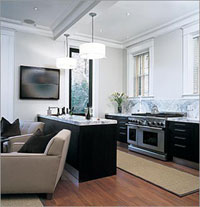 "The [Washington Post] magazine's Spring Home and Design issue explores the theme of less is more: An avid collector learns to let go of years of treasures, an Annapolis couple downsizes from a 6,000-square-foot house to a boat and a renovation of a school into a residence shows the success of a clear, strict vision."
Link: Washington Post Magazine
Photograph: Timothy Bell
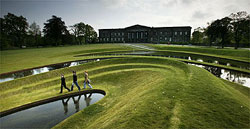 "A wriggly earth bank set around three sinuous ponds, which transformed a flat patch of scrubby grass in front of the Scottish National Gallery of Modern Art in Edinburgh, last night won the £100,000 Gulbenkian museums prize, the richest single prize in the arts."
Via: The Guardian
Link: Gulbenkian Prize
Link: Scottish National Gallery of Modern Art
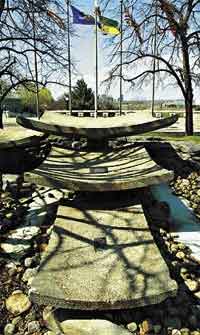 "Created in the 1960s, this often overlooked urban gem is still a work of artistry and breathtaking vistas."
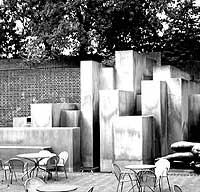 "Nationwide our modern built landscapes are in danger. The designs of Lawrence Halprin, a leader in landscape architecture for decades, are particularly vulnerable at this time. Halprin recently received the National Endowment for the Arts gold medal from the President Bush. Despite this national recognition for design excellence, the Virginia Museum of Fine Arts included demolition of Halprin's sculpture garden in its $100-million building expansion plan designed by London-based architect Rick Mather."
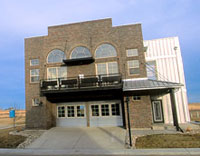 "A fascinating piece in Metropolis about The Ironwork Lofts, a rather dismal collection of executive homes in Colorado masquerading as pseudo factories, canneries and warehouses. The architects responsible are Terra Verde, who are seemingly able to turn their hand to anything, from the style that should be known as Prairie Golf, through to Neo Adobe and Steroidal Ranch. The developers, Cornerstone Homes ('we build livable art'), have identified a niche - people who want the space and style of city living without the actual city."
Article: Metropolis
Project: Ironworks Lofts
Firm: Terra Verde Architects
Via: Things Magazine
"Until recently, green design was a preoccupation of those who could afford to tinker with geothermal wells, air-filtration systems and solar panels. But green features are now appearing in places like Harlem and the Bronx, as energy-efficient materials and appliances, and the resulting economies, start to show up in affordable housing."Link: NY Times
"We've definitely seen the trend grow over the last 10 years or so," says Catherine Mahan, president of Mahan Rykiel Associates, a Baltimore landscape architecture firm that designed several area healing gardens.Link: Baltimore Sun
A growing body of research shows that people feel better when they see gardens, and there are specific biological responses that account for that sense of wellbeing.