Books
Between Architecture and Construction
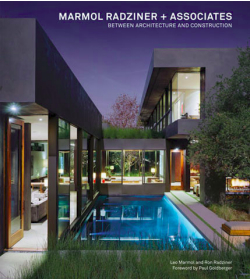 We've featured a few articles about MR+A's work in the past, from furniture to prefab, so I was pretty stoked to open the mailbox today and find a copy of Princeton Architectural Press' recent book, Marmol Radziner + Associates: Between Architecture and Construction. Published in July 2008, this book runs the gamut of MR+A's work. Beginning with the "Early Years", the book highlights some of the witty quotes placed on their office marquee then quickly jumps into many of their most well-known projects including the Kaufmann House restoration, the Harris Pool House, the TBWA/Chiat/Day offices in San Francisco, and the Glenncoe Residence.
In addition to the firm's commercial and residential work, there is also a section showcasing their furniture work and the design decisions that went into creating their Glenncoe furniture line.
Overall, this is a well designed book that truly captures the creativity and uniqueness of MR+A. Definitely give it a look the next time you're at your local bookseller.
Link: Princeton Architectural Press
Link: Indoor/Outdoor
Web book for architecture students

A new "paperless" architecture book featuring facades from around the world.
This book is the result of two years of architectural research. Dynamic facades, ventilated, high-tech or traditional composites with new features. This book shows that currently new skins not only act as an isolating element, besides interact with the environment, optimizing energy exchange with the outside. From Germany to Australia or Korea to Colombia, there are many examples that readers can visit with this publication. With international vocation due to bilingual English-Spanish text and a language away from technicalities, this paper aims to show as an "interactive toy" the evolving field of the facades in architecture.
Link: Piel.Skin [Thanks, Ethel]
Twenty villas, cottages, and cabins in detail
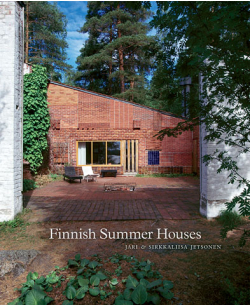 One of our most popular posts here at L+L is the Finland Summer House posted by James back in January 2005. If exploring summer houses in Finland is your raison d'être, then we have a book for you. Finnish Summer Houses by Jari & Sirkkaliisa Jetsonen is a new book from Princeton Architectural Press that showcases work from architects such as Eliel Saarinen, Alvar Aalto, Juhani Pallasmaa and many others.
Architectural styles featured in the book run the gamut from farmhouse villas of the late 1800's to the modern structures of today.
Link: Princeton Architectural Press
Canada's Alternative

So like most designers I have my usual monthly design reads such as Azure, Canadian Interiors, Metropolis and yes even Dwell from time to time. All fine reads that normally come from magical places such as Toronto, New York or some other town big enough to have mutliple NFL teams. So as a Western boy from Alberta, I have to admit being red faced at JUST being introduced to a design mag originating from a town only a short drive down the highway.
elemente Magazine is a Calgary based publication that provides Canadians with a Western perspective on design, architecture and lifestyle. From tales of sharing cocktails with Will Alsop (personal fave) to profiling up and coming designers, it really is a great fix for design junkies.
Influenced by some of the world's most renowned architecture and design-driven publications, Elemente provides a unique regional platform that focuses on current architectural highlights, key players, products, designs and emerging trends. Singular in personality and voice, Elemente's mandate is to deliver contextually relevant content exclusive to the region that is functional and purposeful, entertaining yet challenging, enlightening and informative, humourous yet inspirational.
Full cover shot of the September issue after the jump....
Link: elemente
Books — August 23, 2007
Posted by Anthony
The newest and coolest products on the horizon.
 I just spent some time at the local B&N and discovered issue #1 of Antenna magazine. Flipping through it, Antenna read like the RSS feed of my favorite blogs: gadgets, snowboards, sneakers, messenger bags, sunglasses, even Oreos(!).
Antenna is the first mainstream magazine to target individuals who are on a constant quest for the newest and coolest products on the horizon. And it does so without using celebrities, models, concept shoots, service stories and whatever else we deem superfluous to our mission: to become a guidebook, allowing readers to navigate the most extensive collection of products ever compiled in a single publication, while championing the people who create, sell and collect them—all in one comprehensive, artful, elegant and innovative format.
Extra points for Antenna because their first cover compliments the color palette of the L+L site, too :)
Link: Antenna
Publish your work in Pamphlet Architecture 29!
 To promote and foster the development and circulation of architectural ideas, Pamphlet Architecture is again offering an opportunity for architects, designers, theorists, urbanists, and landscape architects to publish their designs, manifestos, ideas, theories, ruminations, hopes, and insights for the future of the designed and built world. With far-ranging topics including the alphabet, algorithms, machines, and music, each Pamphlet is unique to the individual or group that authors it. This call for ideas seeks projects that possess the rigor and excitement found throughout the rich history of Pamphlet Architecture.
Link: Pamphlet Architecture
Deadline: November 15, 2006 January 16, 2007
Originally posted 10/20/2006
Books — March 20, 2006
Posted by James
Modern living spaces
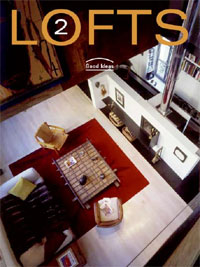 One of the things I like best about working at L+L is when we hear from people that being featured on L+L has led to good things.
That is the case with this forthcoming book about loft dwellings which will include the
Ben Avigdor Lofts by U-I: Avi Laiser & Amir Shwarz. The publisher saw the project right here on L+L... congrats, Avi and Amir!
The book is due to be released on May 1, 2006.
Author: Christian Campos
Link: Amazon
Publisher: Harper Collins
Reference:
Ben Avigdor Lofts (L+L)
A free book that shows how to attain Platinum LEED on a conventional budget
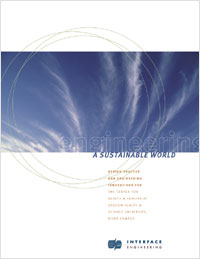 Portland based Interface Engineering has published an illustrated guide demonstrating how to achieve Platinum-LEED on conventional building budget in a FREE 48-page book which uses their current project for Oregon Health and Science University as a case study.
Busting a key economic myth, Interface Engineering of Portland, Oregon (has) engineered a top-level green building on a conventional budget, opening the way for other large scale projects to achieve high performance at standard cost. The firm also released an illustrated guide sharing the secrets and principles behind the project, formally known as The Center for Health and Healing at the River Campus of Oregon Health & Science University.
Link: Green Building Breakthrough
Via: Groovy Green - Green Building: Delivering Champagne on a Beer Budget
Center for Health and Healing project team:
Architect: GBD Architects
Engineer: Interface Engineering
The Works of Eva Jiricna
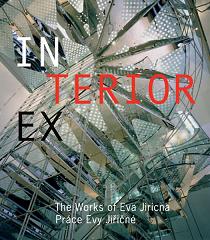 Czech born / London based architect, Eva Jiricna , is represented quite nicely in a recent publication of her projects titled 'In/Ex Terior'. The book showcases a selection of 39 projects and designs which includes over 250 photographs and drawings to really get the point across as to how much of a talent she really is. It's a well layed out portfolio of retail, hotels, night clubs and much, much more.
Over the last decade Jiricna´s contribution to architecture and design has been recognised with personal awards, including being made a Royal Designer for Industry, a Commander of the British Empire for Services to Interior Design, election as a Royal Academician by the Royal Academy of Arts, and induction in the American Hall of Fame. She holds honorary doctorates and professorships at several universities (e.g., Southampton Institute, Technical University in Brno, University of Sheffield, Academy of Arts, Architecture and Design in Prague). In 2003 she was elected a President of Architectural Association of London. She participates on international juries and lectures widely on her work.
Link: Eva Jiricna Architects
Helping companies innovate
 IDEO is what the dot.com companies tried to be and failed. A place where imagination is rewarded, and failure is just part of the path to success. IDEO is fueled by team creativity, and they believe that your company should be too. That's why they have produced Method Cards, a set of 51 cards that are meant to get your team inspired and on the path to great design.
IDEO firmly believes that the best way to spark the type of creativity that leads to innovation is by having fun. Method Cards are a design tool that use images, affinity diagrams and processes like mapping to get you going, but may also encourage your team to bodystorm in order to understand how the user might feel in a particular environment.
Link: IDEO
Update 3/14/06:
Article: NY Times - Going Off the Beaten Path for New Design Ideas
One Small Project, one big impact
 If leftover people, leftover spaces and leftover materials are part of your life, then One Small Project would like to hear from you. The architects, students, designers and artists contributing to One Small Project are working towards helping and profiling the conditions of people known typically as squatters, self-builders, slum dwellers, informal settlers or displaced persons, and are highlighting the unique projects that help some of the 1 billion people who find refuge and community among the spaces that people forgot about, and the materials they threw out.
In an upcoming book called Building More Wanting Less, Wes Janz PhD, RA Associate Professor of Architecture, Ball State University will feature the stories and projects that aim to draw attention to an unfortunate reality. A call for submissions is currently out.
Link: One Small Project
Parks, landscape, water, urban design...
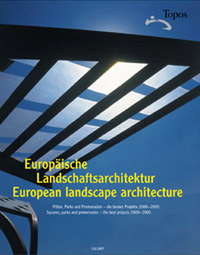 European Landscape Architecture is the latest Topos publication representing the best in open-space architecture including parks and squares, waterfront promenades and memorials across Europe.
All of the projects featured were completed between 2000 and 2005, making it an extremely relevant resource for professionals and students. The entries included in European Landscape Architecure were chosen from the Topos special edition International Review of Landscape Architecture and Urban Design. The book highlights work from a broad range of landscape architects, providing a good cross-section from both well-known and lesser-known firms.
Link: Topos
Books — September 27, 2005
Posted by James
Building On An Elevated Surface
 Excerpted from the publisher:
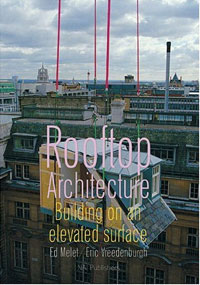
The land in big cities has be used more intensively, but the possibilities are limited. One of the leading options for the future is the use of the flat roofs of residential buildings and office blocks as a building site.
This book analyses and describes the opportunities for realizing projects of this kind, as well as the potential difficulties, using interesting examples of construction on top of existing buildings in the Netherlands and abroad. It will therefore be influential in establishing a benchmark for architecture and urban planning that is a necessity if rooftop architecture is to have a serious future.
Editor: Eric Vreedenburgh
Link: NAi Publishers
Link: Amazon
Via: Things
Related:
Up on the rooftop (L+L)
The GreenSpec® Guide to Residential Building Materials
 From the publisher:
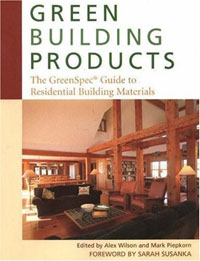
Here's a comprehensive directory of green building products for home building and remodeling featuring more than 1,400 descriptive listings for products from ag-fiber panels to zero-VOC paints. All phases of residential construction are covered, from sitework to flooring to renewable energy. Products are grouped by function, and each chapter begins with a discussion of key environmental considerations and what to look for in a green product.
Editors: Alex Wilson and Mark Piepkorn
Link: Green Building Products (BuildingGreen)
Books — September 8, 2005
Posted by Deborah
World Class Architects Show How It's Done
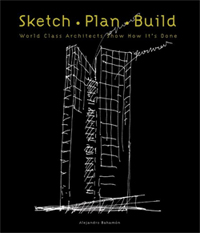 There is a certain rush that comes from participating in the genesis of a great idea, and yet there is much to be learned from watching an idea unfold on the pages of Alejandro Bahamon's book Sketch Plan Build. In Sketch Plan Build, 30 architects let you in on the creative and technical processes that led to the final plan and construction of major works. Beautifully illustrated, this book provides rough sketches and digital renderings that allow you to understand the thoughts and influences of each featured architect creating a behind the scenes companion to the final product. Building after building is detailed over 500 pages that highlight the mastery and variety of approaches to drawing, model making and photography giving you a front row seat to the metamorphosis of a single simple idea into a project
of great complexity.
There is a certain rush that comes from participating in the genesis of a great idea, and yet there is much to be learned from watching an idea unfold on the pages of Alejandro Bahamon's book Sketch Plan Build. In Sketch Plan Build, 30 architects let you in on the creative and technical processes that led to the final plan and construction of major works. Beautifully illustrated, this book provides rough sketches and digital renderings that allow you to understand the thoughts and influences of each featured architect creating a behind the scenes companion to the final product. Building after building is detailed over 500 pages that highlight the mastery and variety of approaches to drawing, model making and photography giving you a front row seat to the metamorphosis of a single simple idea into a project
of great complexity.
Author: Alejandro Bahamon
Link: Sketch Plan Build
Publish your work in Pamphlet Architecture 28!
 Founded in 1977 as an alternative to mainstream architectural publishing, Pamphlet Architecture encourages architects and writers to put forth their ideas, theories, and designs in modest, affordable booklets. Its success is legendary: Pamphlet Architecture has helped launch the careers of architects from Steven Holl and Lebbeus Woods to Zaha Hadid, and has had influence far exceeding the ad-hoc nature of these humble books.
Could your work spark the next generation of architectural discourse?
Pamplet Architecture is seeking practicing or aspiring architects, urbanists, and landscape architects with visually provocative and intellectually compelling ideas for the future of the designed and built world.
Link: Pamphlet Architecture
Deadline: October 10, 2005
Books — August 8, 2005
Posted by Anthony
Architecture for the Environment
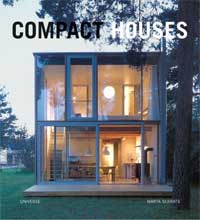 Available in September, Compact Houses by Marta Serrats and Universe Publishing:
"In an age of "McMansions," this international survey of the latest in residential architecture proves that small is beautiful-and responsible. The houses profiled are designed to make maximum use of the smallest possible footprint in order to protect the environment. The houses profiled here prove that efficiency as well as beautiful, thoughtful design can be had in a tiny setting. Each project includes a case history describing its design challenges and how the architect overcame them, a detailed blueprint for each house, full-color photos of the interior and the exterior, and plans of the layout."
Author: Marta Serrats
Link: Universe Publishing
Books — March 7, 2005
Posted by James
Great and good.
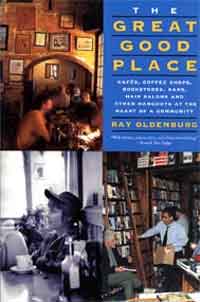 A bit of a lull around here... sorry folks, sometimes we just slow down for some reason. Other than just being busy, I've been spending part of my time with this book.
I was introduced to The Great Good Place when I was working on my graduate thesis, but I only read a couple of chapters... back then I had stacks of books I was reading, so many were only given a quick scan. Six years later I am finally getting around to actually reading the whole thing. It is an interesting look at the roll of places (especially unique and authentic places) in social and community life.
The Great Good Place argues that "third places" - where people can gather, put aside the concerns of work and home, and hang out simply for the pleasures of good company and lively conversation - are the heart of a community's social vitality and the grassroots of democracy.
Author: Ray Oldenburg
Link: Amazon
Books — February 23, 2005
Posted by Anthony
Japanese Design Solutions for Living
 Our previous blog on The Very Small Home generated a comment about how concrete structures in Asia were "Stalinist grey, drab, utilitarian...cement block monstrosities." Well, on that note, here's another book highlighting those horrendous living conditions that the Japanese endure. ;-)
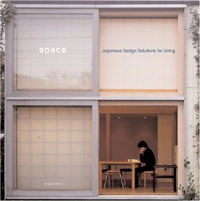
Written by Michael Freeman and published back in August 04, Space explores Japanese architecture and design in size constricted areas.
In their work, Japanese interior designers and architects constantly draw on cultural traditions, while using a modern, even radical approach. Whether in the use of lightweight partitions to create flexible spaces, deliberate profligacy to give a feeling of generosity, or strange perspectives, the results are not mere workaday solutions, but artistic and unusual ones that can turn a lack of space into a surfeit of style.
Link: Space (Amazon)
The Steps to Green Architecture
 Eric Corey Freed is a San Francisco based architect and founder of organicARCHITECT, a firm dedicated to the design and creation of buildings that embody ecological & social responsibility.
Eric's forthcoming book, The Inevitable Architect: The Steps to Green Architecture, shows other architects how to become green.
Free downloads from the book are available on his website. Chapters titles include: Green Building Specifications, Green Guidelines for your Home, How to Sell Your Clients on Green Buildings, etc.
Link: organicARCHITECT - The Inevitable Architect: The Steps to Green Architecture
Via: Enviropundit
Books — February 3, 2005
Posted by Anthony
Japanese Ideas for Living Well in Limited Space
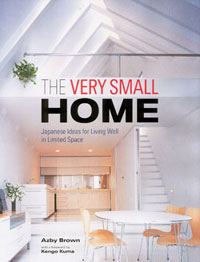 Ever since I picked up a copy of the Slesin book Japanese Style back in the early 90s, I have been a huge fan of Japanese design. Japanese homes are the epitome of compact and efficient design and in Azby Brown's forthcoming book, The Very Small Home, he explores the attitude in Japan towards efficient and functional design. Needless to say, you won't find any McMansions here. Projects in the book range from traditional and handmade to futuristic.
Urban living space in the west is becoming increasingnly crowded; conditions that the Japanese have coped with, and their architects have gained much experience dealing with, for quite some time. Japanese design patterns are bound to be adopted by Western architects and this book makes a point to showcase some of the finest small home design that Japan has to offer.
Release Date: May 2005
Link: Amazon
Author: Azby Brown
Publisher: Kodansha International
Books — January 30, 2005
Posted by James
Rethinking the Post-Industrial Landscape
 Continuing in the vain of landscape architecture and reclaimed sites...
Around the world abandoned industrial sites, landfills, waterfronts and other tainted lands provide opportunities and challenges. Vancouver is seeking to turn an industrial waterfront into a residential district, Sydney transformed polluted wastelands into their Olympic Park, and outside of London Stockley Park reclaimed an ancient manufacturing site.
Manufactured Sites explores the "reclamation of land and the integration of innovative technologies and design strategies in their redevelopment and regeneration" from the perspective of landscape design professionals, including a chapter/project by Peter Latz. Editor Niall Kirkwood is an Associate professor of landscape architecture, Director of the Masters in Landscape Architecture degree programs, and founder and Director of the Center for Technology and Environment at Harvard GSD.
Editor: Niall Kirkwood
Link: Amazon
Related: Westergasfabriek (Land+Living)
Books — January 8, 2005
Posted by James
A balanced and self-renewing environment
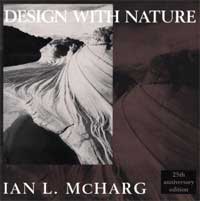 "With a distinct emphasis on human cooperation and biological partnership in design, the author explores the relationship between the built environment and nature to illustrate how both can be used to their full potential without being detrimental or destructive to each other. Provides a combination of scientific insight and constructive design, and shows how to employ what nature offers to the fullest extent without imposing limitations or design constraints to create a balanced and self-renewing environment."
Author: Ian L. McHarg
Link: Amazon
Books — November 9, 2004
Posted by Anthony
Like The Art Book, but greener.
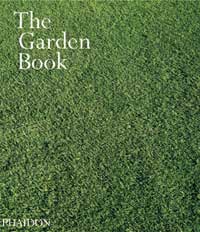 "The Garden Book presents a widely diverse range of designers responsible for some of the most interesting and iconic gardens and landscapes of all time from around the world. Gardens of Ancient Persia, the Moguls of India, and the palaces of Chinese Emperors sit side by side with contemporary gardens from the USA and Europe.
Like The Art Book, this book presents 500 designers in an AZ format that departs from the usual emphasis on genres and time periods. The gardens are carefully selected to choose the appropriate work for key figures which illustrates their influence on the traditions of gardening in many countries around the world. They range, therefore, from the palaces of kings to the all-consuming passions, bordering on obsessions, of amateur enthusiasts."
Link: Phaidon Press
Link: McNally Robinson
Books — October 29, 2004
Posted by Anthony
Time machine to 1957 not included
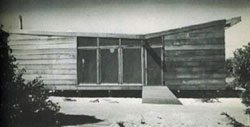 Another great book from our friends over at DigModern. Written in 1957 by Norman Cherner, this book explores small component housing from the 1950's.
An excellent look at small, modernist component built houses by the architect Norman Cherner. Divided into chapters as follows: Plans and intro, Panel Construction, Bent Construction, Girder Construction, Masonary and Foundation Construction, Quonset Construction, Materials and Methods. Excellent isometric drawings and details by the architect. Also sections, elevations, and floor plans. Black and white photos of homes under construction and finished.
Link: DigModern
Books — October 26, 2004
Posted by James
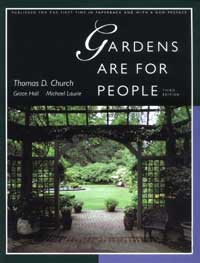 A must read for anyone interested in modern landscape design... we here at Land+Living borrow liberally from Church's philosophy.
 This text contains the essence of Thomas Church's design philosophy, as well as practical advice. It is illustrated by site plans and photographs of some of the 2000 gardens that Church designed during his career. Called "the last great traditional designer and the first great modern designer", Church was one of the central figures in the development of the modern Californian garden. For the first time, West Coast designers based their work not on imitation of East Coast traditions, but on climatic, landscape and lifestyle characteristics unique to California and the West. Church viewed the garden as a logical extension of the house, with one extending naturally into the other.
Author: Thomas D. Church
Link: Amazon
Books — September 26, 2004
Posted by Anthony
Old School Prefab
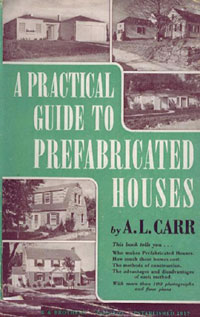 "Comprehensive guide to prefabricated houses circa 1947. Describes in detail the five different methods of prefabrication and sets forth the advantages and disadvantages of each method. Photographs and floor plans plus facts and figures about each manufacturer's homes. Includes a directory of prefabricators with addresses. Midcentury modern as well as more conventional designs."
Link: Dig Modern
Books — September 14, 2004
Posted by James
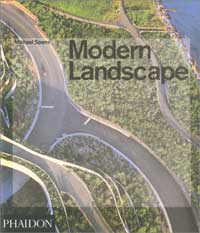 "The issue of landscape is of increasing concern to us as the twenty-first century begins, not only as an area of design and study but also as it is affected by building development and the maintenance of eco-systems. This important and highly topical book extends the existing debate to examine recent projects and their part in our growing concern about the maintenance and enhance-ment of our natural spaces."
"Modern Landscape features over thirty international projects, including schemes by both architects and landscape architects, often working in collaboration. Following an introductory essay, the book is arranged into four sections of extensively illustrated case studies, each of which deals with a different aspect of landscape design - Parkland, Architecture as Landscape, Garden Landscapes and Urban Interventions - relating it directly to historical and contemporary precedents."
Author: Michael Spens
Link: Amazon
Books — September 4, 2004
Posted by Anthony
Architect of Steel
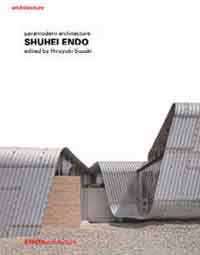 "Japanese architect Shuhei Endo can be defined as an architect of steel since he distinctly favors this material in the buildings he designs and continually experiments with its infinite possibilities. His works are apparently weightless and communicate a sense of liberty: undulating sheets of steel are twisted into spirals and wrapped around buildings in overlapping layers, like petals of flowers, or arranged on different levels to create a membrane around open spaces. This approach is most evident in the “great roofs” that house Endo-designed offices, such as Rooftecture N (Nisinomiya, Hyogo, 1998), or spaces for relaxation and meetings, such as Rooftecture T (Fukui, 1997), as well as private homes, such as Springtecture H (Harima, 1998) and Rooftecture M (Maruoka, 2001). Born in 1960 in Shiga Prefecture, Japan, he graduated in 1986 from the Kyoto School of Art and then joined the Osamu Ishii & Biken Associates architectural studio. In 1988 he founded the Shuhei Endo Institute in Osaka and began teaching at Kinki University, Kobe Design University and the Fukui Institute of Technology."
Author: Shuhei Endo
Link: Amazon
Books — September 3, 2004
Posted by James
160 figures that have shaped America's land
 "An important look at 140 prominent landscape architects and their work, full of new and archival photographs--the first reference book of its kind. An absolute must for landscape architects, students, and anyone interested in the design and evolution of the American landscape. Each entry includes biographical information, a discussion of the architects' approach and methodology, and representative plans and photographs of major projects. Emphasizes vital issues in landscape preservation and ecologically sound design."
Authors: Charles A. Birnbaum & Robin Karson
Link: Amazon
Books — September 1, 2004
Posted by Anthony
Modernist Gardens in Southern California
 From the publisher:
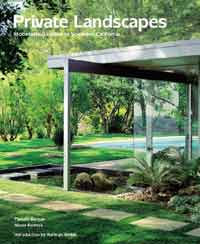
"When we think of the gardens of Southern California, we tend to think of the enormous semiarid landscapes of the Huntington and Rancho Los Alamitos, often built on the sprawling grounds of former ranches. But there is another garden tradition in Southern California: the modest, rectangular suburban plots designed by the most famous architects of mid-century modernism: Richard Neutra, Rudolph Schindler, Gregory Ain, Raphael Soriano, Harwell Hamilton Harris, A. Quincy Jones, and John Lautner. These architects saw the garden as an outdoor extension of the space of the houses they designed, rather than a neo-Spanish fantasy to be added later by a "landscapist." Their modern gardens made use of low-maintenance, drought-resistant plants, and made room for informal outdoor living by children and adults with an emphasis on recreation and exercise."
Authors: Pamela Burton, Marie Botnick
Link: Princeton Architectural
Books — August 30, 2004
Posted by James
The Life and Legacy of George Nakashima
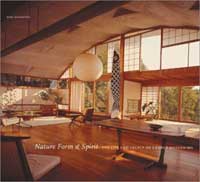 George Nakashima was a leader of the American modern craft furniture movement.
Acclaimed furniture designer George Nakashima (1905-1990) made boldly original pieces prized for their superb craftsmanship and their organic use of the natural lines and grain of wood. Today his beautiful creations are avidly sought by private collectors and are housed in museum collections all over the world. This survey of Nakashima's life and work-written by his daughter, the noted designer Mira Nakashima-is the most revealing look we have ever had at this woodworking genius and his profound influence on contemporary design. Mira Nakashima chronicles not only the furniture designs for which her father was best known, but also his equally fine work as an architect. Wonderful modern craft furniture
Link: Amazon
Designer: George Nakashima Woodworker
Bio: Designboom (with images)
Books — August 11, 2004
Posted by James
"One of the most influential landscape and garden designers of the twentieth century, Roberto Burle Marx (1909-1993) has inspired generations of gardens around the world."
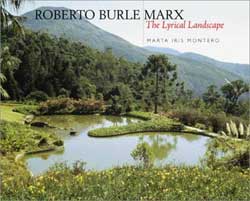 "His sweeping forms and painterly approach to planting were revolutionary when they first came to public attention in the 1930s, and many contemporary designs today owe his vision a great debt. Born in São Paulo, Brazil, the son of German emigrants, Burle Marx studied painting in Rio de Janeiro, an aspect of his work that persisted throughout his career. Drawing on his masterly knowledge of Brazil's rich tropical plants, his fine-art training, and his love of music and sculpture, he began with private landscape commissions before his work caught the eye of architects Le Corbusier and Oscar Niemeyer. With them, Burle Marx created some of his most memorable works in Brasilia and elsewhere around Brazil."
Link: Amazon
Books — July 30, 2004
Posted by James
A Search for Environmental Harmony
 Continuing our green theme here and going with yesterday's blog about Losing the lawn, here is a book that sheds light on the problems with lawns and provides good sustainable solutions.
"The authors in this book argue that our dedication to maintaining beautiful lawns is contributing to the serious environmental problems facing the planet, and they offer strategies for creating and caring for aesthetically pleasing and ecologically sound lawns. This new edition updates the original text and adds a chapter and illustrations showing what progress has been made in the ecological management of landscapes over the past decade."
Link: Amazon
Books — July 26, 2004
Posted by Anthony
Twenty-two essays on modernism in landscape design.
 "During the 1930s Garrett Eckbo, Dan Kiley, and James Rose began to integrate modernist architectural ideas into their work and to design a landscape more in accord with the life and sensibilities of their time. Together with Thomas Church, whose gardens provided the setting for California living, they laid the foundations for a modern American landscape design.
This first critical assessment of modem landscape architecture brings together seminal articles from the 1930s and 1940s by Eckbo, Kiley, Rose, Fletcher Steele, and Christopher Tunnard, and includes contributions by contemporary writers and designers such as Peirce Lewis, Catherine Howett, John Dixon Hunt, Peter Walker, and Martha Schwartz who examine the historical and cultural framework within which modern landscape designers have worked."
Link: Booklounge.com
Books — July 21, 2004
Posted by Anthony
How to Improve Your Lawn and Garden.
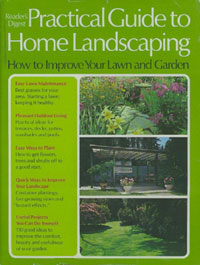 If you're in search of 50's, 60's, and 70's modernist books, then DigModern is the place for you. We're always browsing their selection and just noticed this great book from 1972:
"One of the best landscape do-it-yourself guides from the period. Profusely illustrated with drawings and photos, both color and black and white. Well organized with wonderful modernist examples and directions for how to acheive them. Douglas Baylis, Armand Benedek, Thomas Church, just a few of the contributors. Many examples inspired by Japanese gardens. One of our favorites for thoroughness and style."
Link: Dig Modern
Books — July 14, 2004
Posted by Anthony
Making the most of your space
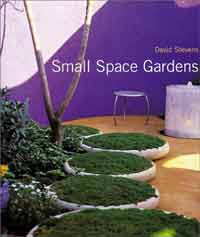 We're not sure about you, but we don't have acres upon acres to create our manicured garden. Living in La-La land, we're pretty much stuck with a 10x10' patch of dirt. So we have to make the best of it. David Stevens provides plenty of clues and ideas in his book, Small Space Gardens.
"A small garden can be beautiful, low maintenance, sheltered, intimate and fun. Good design, both inside and outside the home is timeless and is based on sound principles. Small Space Gardens takes you through the entire planning sequence, providing a progressive organizational sequence that melds interior, exterior and borrowed landscape into an elegant, practical and integrated whole."
Link: Small Space Gardens
Author: David Stevens
Books — July 6, 2004
Posted by Anthony
A visual source book of ideas
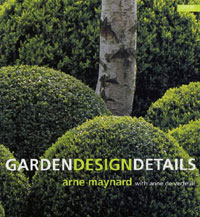 "Packed with ideas for every type of garden - large, small, town and country - this book demonstrates Arne's imaginative approach and comprehensive understanding of building gardens; it is the essential guide to good garden design. Whether you want to remodel your entire garden or just a small part of it, Garden Design Details has hundreds of ideas to spark your creativity. From walls and paving to lawns, topiary, water features and even tables and chairs, this book shows the huge variety of materials and forms and explains how to choose the best for you."
Author: Arne Maynard
Link: Amazon UK
Books — June 22, 2004
Posted by Anthony
The philosophy of minimalism
 "Award-winning garden designer Christopher Bradley-Hole has drawn together a great variety of minimalist gardens from around the world - large and small, urban and rural. The projects are grouped into thematic chapters, including the landscape garden, pools and water gardens, courtyard gardens, and terrace and roof gardens. Among the designers are Vladimir Sitta, John Pawson, Luis Barragán, Seth Stein, Jacques Wirtz, Martha Schwartz, Shodo Suzuki, and Isamu Noguchi. Large color photographs and detailed images show the gardens in context; the text discusses the inspiration behind each garden, the relationship of space and proportions, and the frequent use of unusual materials and imaginative planning. Directories of materials and plants for the perfect minimalist garden are included as well."
Author: Christopher Bradley-Hole
Link: Booklounge.com
The Sam and Alfreda Maloof Foundation for Arts and Crafts
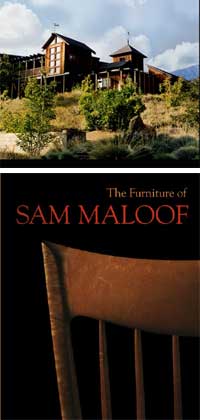 Sam Maloof is well known as a master craftsman and designer of contemporary furniture. His works are featured in the permanent collections of many of museums, including, the Smithsonian, the New York Metropolitan Museum of Art, the Los Angeles County Art Museum, Boston's Museum of Fine Arts and the Philadelphia Museum of Art.
Now through the Maloof Foundation, the Maloof's home in Alta Loma, California (east of Los Angeles), is open to the public. The home evolved over many years and was crafted by Sam Maloof as if it were a giant piece of furniture.
Link: Maloof Foundation
Book: Amazon
Books — June 15, 2004
Posted by Anthony
Rooftops, Balconies, and Terraces
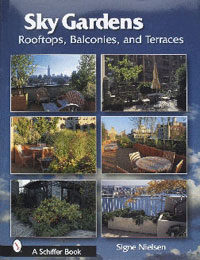 Latest book from landscape architect Signe Nielson. From the publisher:
"Great design ideas are combined with practical tips on transforming an outdoor living space into a personal oasis. Lavishly illustrated with hundreds of examples, this book provides a stunning portfolio of hidden treasures and is packed with innovative and useful suggestions. You will be able to make informed choices for everything from style to plant selection.
The book guides you through steps toward composing a sky garden, beginning with key principles of design. Discover endless possibilities for creating a special place, whether a shady nook for relaxation or a dramatic vista for alfresco dining. Bring your airy retreat to life by choosing from eye-catching plant combinations and furniture arrangements. Add the finishing touch with lighting, outdoor sculpture and ornaments, and fountains and other water effects that make a garden uniquely your own.
This is an invaluable resource for everyone planning to renovate or build a rooftop, terrace, or balcony garden. With expert advice and images from a leading landscape architect, you will be inspired to express your personality by adapting the ideas to suit your taste, needs, and budget."
Link: Schiffer Books
Link: Amazon
Books — June 10, 2004
Posted by James
Land/Earth artist
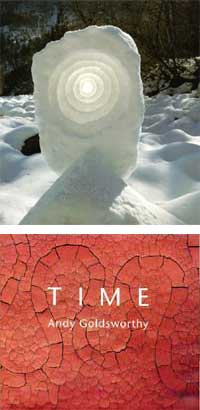 We came across this website about artist Andy Goldsworthy by a student in the Environmental Analysis program at Pomona College. We have always admired Mr. Goldsworthy's work, so this seemed to be the perfect follow up to our first art category post from yesterday.
Goldsworthy makes site-specific pieces of art using only the materials and tools found on the site where he is working. We were drawn to respect for nature and the sense of place inherent in Goldsworthy's art. Most of his work is created in isolated natural site, but he has also done works in urban environments as well as installation piece such as the current exhibit at the Met in New York. An important aspect of his work is the passage of time and the decay of his art by the forces of nature.
Link:
Andy Goldsworthy
Please note that the images across the top of the page are links - slow loading rollovers
Time: Amazon
One man’s journey -- From greedy real estate developer to a founder of the green building movement.
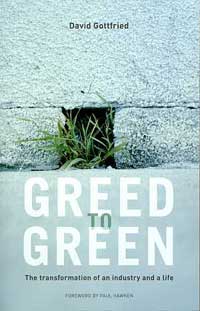 A new book by David Gottfried, president of sustainable development consulting company WorldBuild Technologies.
Excerpt from the Foreword by Paul Hawken:
To say this book is about the power of one person to change the world, though true, would be a cliché. This book is not about David, sustainability, or even green buildings. It is about the mystery of change. Although it is axiomatic that everything changes, it is a mystery as to how things change. What we have here is a first-person and animated account of how things did change. When you read it, you will draw your own conclusions. Yes, his is a story of pluck and determination, to be sure. And it is one of timing, hard work, and manufactured luck. But above all, it is a story of conviction. Not the conviction that makes others wrong, but more an affirmation: of what is right and what is possible.
Green to Green
Books — May 24, 2004
Posted by James
Between Architecture and Landscape
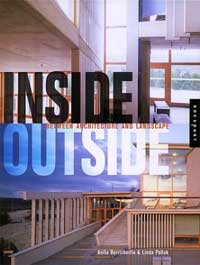
Inside/Outside (By Anita Berrizbeitia, Linda Pollak) constructs frameworks of interpretation for architecture and landscape architecture, and discloses relations between them which are normally overlooked.
Five intriguing "operations"-- reciprocity, materiality, threshold, insertion, and infrastructure-each initiate an alternative way of looking at the construction and representation of relationships between architecture, landscape, city, and individuals. Twenty-four projects each contribute in a unique way to the definition of an operation.
Included in this book are an exciting mix of well- and lesser-known late modern and contemporary projects from such noted talents as Frank O. Gehry, Rem Koolhaas, Carmen Pinos and Enric Miralles, Louis Kahn, Maarten Struijs and Joop Schilperoord, and more.
Link: Barnes and Noble
Books — May 21, 2004
Posted by James
Reinventing Outdoor Space
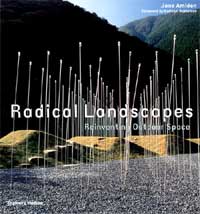 "Landscape architecture today is one of the most active and revolutionary areas of design. With environmental awareness at an all-time high, landscape designers are reshaping our surroundings, from small-scale private gardens to large-scale public squares. Drawing on a broad palette of ideas and concepts, and presenting entirely new ways of seeing, interpreting, and designing a "landscape," the book is organized into seven themes that comprise today's most important issues and techniques: light and color, movement, order and objects, interaction, new contexts, urban interventions, and narrative. Each chapter is illustrated with works by such internationally known designers and architects as Fernando Caruncho, Adriaan Geuze, Janis Hall, Reiser + Umemoto, Peter Walker, and Makoto Sei Watanabe."
Link: Barnes & Noble
Books — May 17, 2004
Posted by Anthony
A reference guide for out-of-work Vegas landscapers.
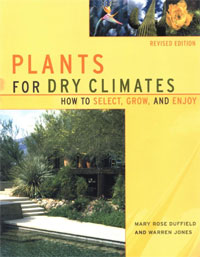 "Packed with full-color photos, easy-to-read charts and information, this reference and how-to book is for anyone interested in dry-climate plants from California to Texas.
Plants for Dry Climates offers complete descriptions of more than 300 species, including a variety of low-maintenance and drought-resistant plants. Over 430 color photographs and useful plant charts help you choose your annuals, perennial color, ground cover and trees."
"Packed with full-color photos, easy-to-read charts and information, this reference and how-to book is for anyone interested in dry-climate plants from California to Texas.
Plants for Dry Climates offers complete descriptions of more than 300 species, including a variety of low-maintenance and drought-resistant plants. Over 430 color photographs and useful plant charts help you choose your annuals, perennial color, ground cover and trees."
Link: Amazon
Remaking the Way We Make Things
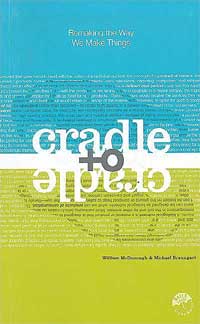 "Guided by this principle, McDonough and Braungart explain how products can be designed from the outset so that, after their useful lives, they will provide nourishment for something new. They can be conceived as "biological nutrients" that will easily reenter the water or soil without depositing synthetic materials and toxins. Or they can be "technical nutrients" that will continually circulate as pure and valuable materials within closed-loop industrial cycles, rather than being "recycled" -- really, downcycled -- into low-grade materials and uses. Drawing on their experience in (re)designing everything from carpeting to corporate campuses, McDonough and Braungart make an exciting and viable case for putting eco-effectiveness into practice, and show how anyone involved with making anything can begin to do so as well."
Authors: William McDonough, Michael Braungart
Link: Amazon
Books — May 11, 2004
Posted by Anthony
Creating Better Homes for a Healthier Planet
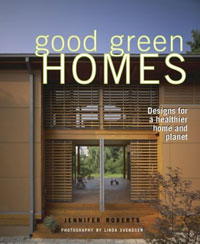 "Green. It conjures images of a meadow in spring for some, and the color of money for others. What does "green" have to do with our homes? In essence, green building-or sustainable building-means being smart about how we use energy, water, and building materials so that we can live well without needlessly damaging the environment. Creating a good green home isn't just about conservation, about using less or saving more-although that's certainly part of it. It's about creating better homes that are easier on the environment, less expensive over the long term, and more delightful to come home to. That's the message Jennifer Roberts wants to share in Good Green Homes, the ultimate guide for people who want to live in comfortable, healthy, environmentally conscious homes."
Link: Barnes & Noble
Books — May 6, 2004
Posted by James
Modern landscape design
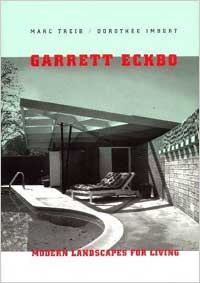 "One of the central figures in modern landscape architecture, Garrett Eckbo (b. 1910) has been a major influence in the field during an active career spanning five decades. While most of the early American designers concentrated on the private garden and the corporate landscape, Eckbo's work demonstrated innovative design ideas in a social setting. This engagement with social improvement has stayed with Eckbo throughout his life, distinguishing both his intentions and achievements, from his early work for the Farm Security Administration to his partnerships (including one of the most prominent landscape firms in the world, Eckbo, Dean, Austin, and WilliamsEDAW) and his years as chair of the Department of Landscape Architecture at the University of California, Berkeley. In an elegant and detailed book that includes more than 100 of Eckbo's designs, Marc Treib examines the aesthetic formation of Eckbo's manner, and by implication the broader field of landscape architecture since the 1930s. Dorothe Imbert writes about Eckbo's social vision, including his belief that ultimately, landscape design is the "arrangement of environments for people." The book also contains a biographical and professional chronology and a complete bibliography of publications by and about Garrett Eckbo."
Authors: Marc Treib, Dorothee Imbert
Link: Amazon
Books — May 6, 2004
Posted by Anthony
The new prefab.
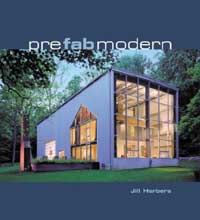 "For many, the idea of prefab may bring to mind trailers and other less desirable images of housing. Instead, the new prefab is becoming the inevitable next step to 'cool' housing as home buyers look for distinctive yet reasonably priced first and second homes. One in six new houses today is a prefab and 400,000 units are now produced in the U.S. each year. More than 50% of all homes are constructed in whole or in part by using building systems -- modular, panelized components produced in quality controlled environments. This exploration of the best prefabricated houses on the market today, from all over the world, along with a resource directory on how you can purchase them, is an invaluable reference for those interested in this alternative."
Author: Jill Herbers
Link: Amazon
Books — May 6, 2004
Posted by Anthony
Modernist residential design in Japan.
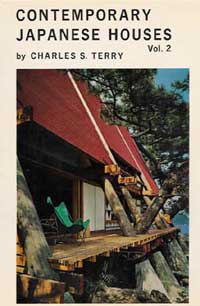 "Inspiring look at contemporary (1968) post war modernist residential design in Japan. Unsurpassed reference for the integration of Japanese and Western design sensibilities. Masters at indoor-outdoor architecture, these modernist Japanese architects show great attention to these relationships. The result is an invaluable reference for both architects and landscape architects. Includes the following chapters: Skylights and Inner Gardens, House and Atelier for a Painter, House Near the Fields, One Room Houses, In the Old Tradition, House on the Bluff, Town Dwelling, House for Actors, House for Actors, House with a Closed Front, House of Brick and Chestnut, Concrete Box for the City, House with Laminated Beams, Suburban House, Weekend House, House with Fir Trees, On Stilts in the Mountains, The House Called Moby Dick, Variation on the Classic Style, Split-Level Country House, Cliff House by the Sea. There are 2 books in this series. This is Volume 2."
1968
Hardcover
Volume 2
1 x 9 x 12
Author: Charles S. Terry
Link: DigModern